









Foal Colors
|
How To Donate Your Educational Photo:
-
If you are wondering what color your foal is, click here. We are having a lot of people send us pictures for this page where it is obvious that the foal owners don't know what color their foal is. Please, only send us photos for this page if you know your foal's color. If you don't know what color your foal is, click here.
-
If your foal is a Paint or Appaloosa, we will only use it if the vast majority of the foal's body is not included in the white patterned areas, as this page is intended to help people determine foal colors, so the colored hairs must be very obvious.
-
This is an educational page, and photos should show a safe environment and healthy horses. Sorry, but here goes my soapbox speech. I don't even know how to respond when I receive photos of wormy, skinny horses in pastures littered with abandoned cars, farm equipment, wire fences laying on the ground, and falling-down buildings. I simply can't put photos like that on an educational page like this, where people come to learn. Hopefully, simply reading a statement like this will help awaken us all to look at our pastures and see if there is anything we need to clean up. Nobody is perfect, but we can try to do our best for the safety of our horses.
-
Please note that this is not intended to be a free opportunity for you to advertise your breeding operation, and instead is an educational page. We will not use photos with watermarks/writing on them. There are many free advertising sites on the Internet at which you can advertise your farm/ranch/horses. Also, only send photos of foals you own. This way, there won't be copyright problems.

Feel free to click the "Send Your Photo" logo
at the left to send a good photo or two
to us for inclusion on our color pages. For this page, newborn photos are best,
but young pre-weaning photos can be helpful as well. We can't use them all, but
will definitely add some good ones!
Sorrel Bay Brown Black Grullo Dun Red Dun
Buckskin Palomino Smoky Black Cremello Perlino Smokey Cream
Gold Champagne Amber Champagne Classic Champagne
Blue Roan Bay Roan Brown Roan Red Roan Gray Silver Dapple
These foal images may not address some composite colors (such as dunskin, grullo roan, graying buckskin, etc.) or unusual genes (silver dapple, pearl, etc.) and instead will focus on the main colors that AQHA recognizes. These mainly include colors associated with dun factor, roan, and the cream gene, though we've added in the increasingly-popular champagne shades.
Examples of Foal Coat Colors
Black Foals
aa Agouti
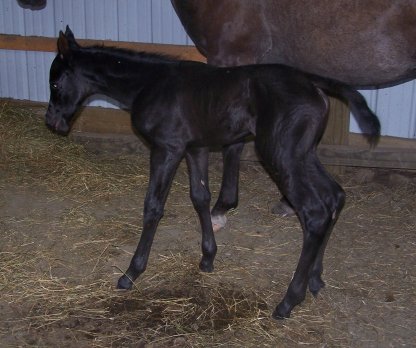
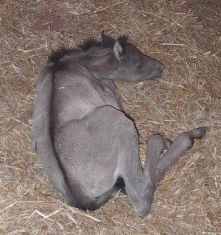
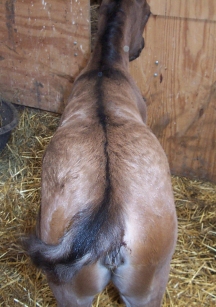
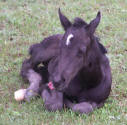
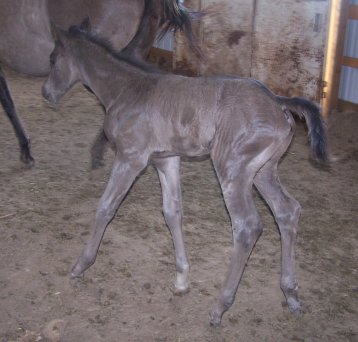
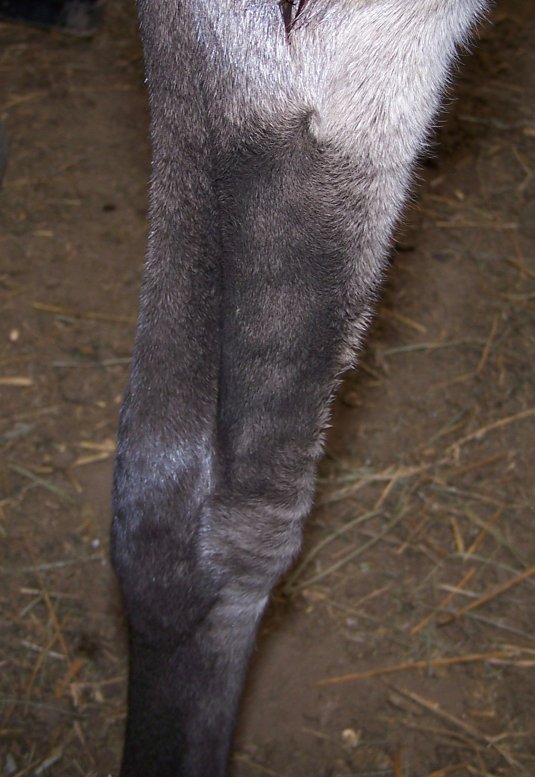
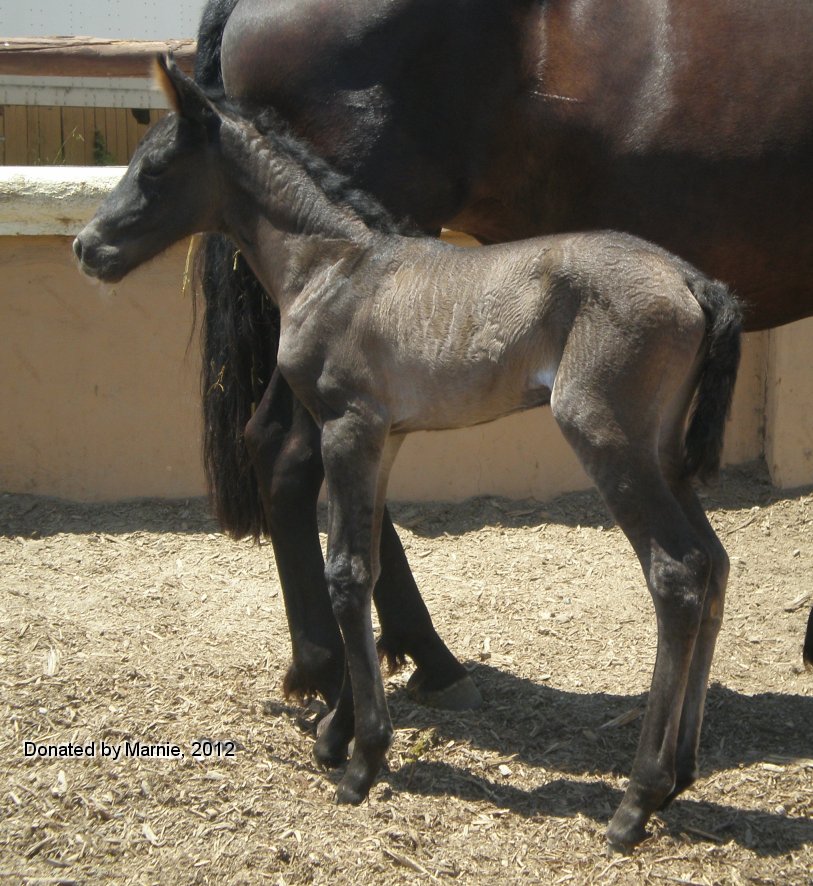
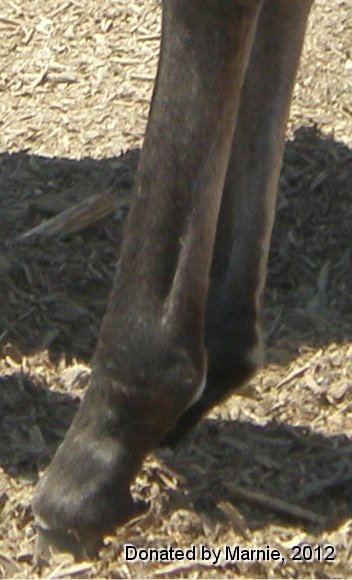
The 5 photos above are of foals immediately after birth...look at the variation
of birth colors! Also note the fake leg bars and light stripes on the backs of
foal legs. These can be found on some black foals' legs, and can closely mimic
the look of dun-factored foals.
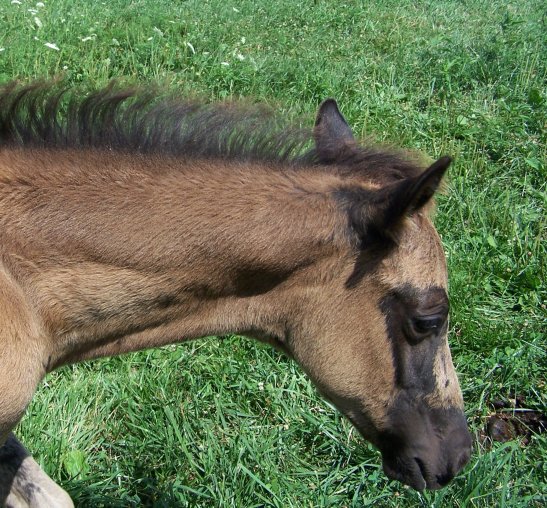
This foal was born charcoal, turned brownish within a month, and then
began shedding off black.
Typical characteristics:
-
Brown, black or gray/charcoal at birth, with or without dorsal countershading
-
May shed off liver chestnut or bay at times in summer of first year
-
Often doesn't look like a true black until winter hair coat comes in.
-
Dorsal stripe (countershading) may extend into the tail, but usually looks a little different than a true dun factor tail.
Sorrel and Chestnut Foals
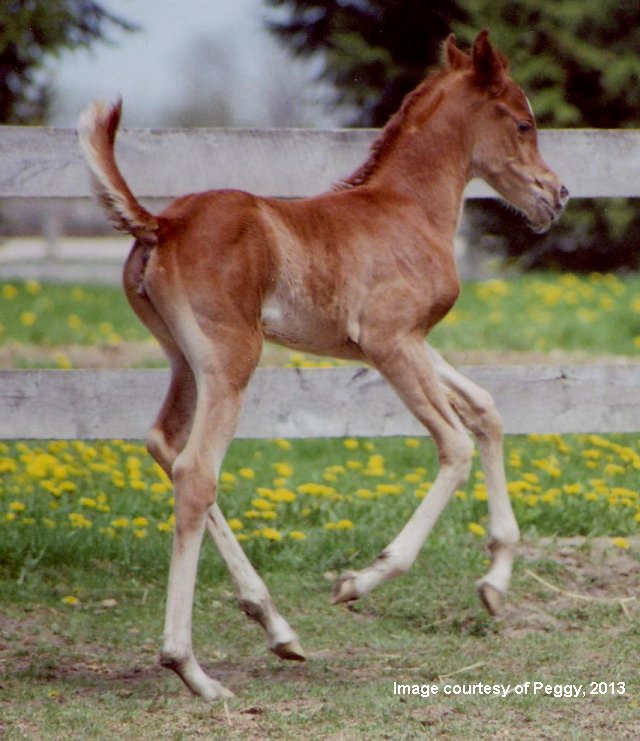
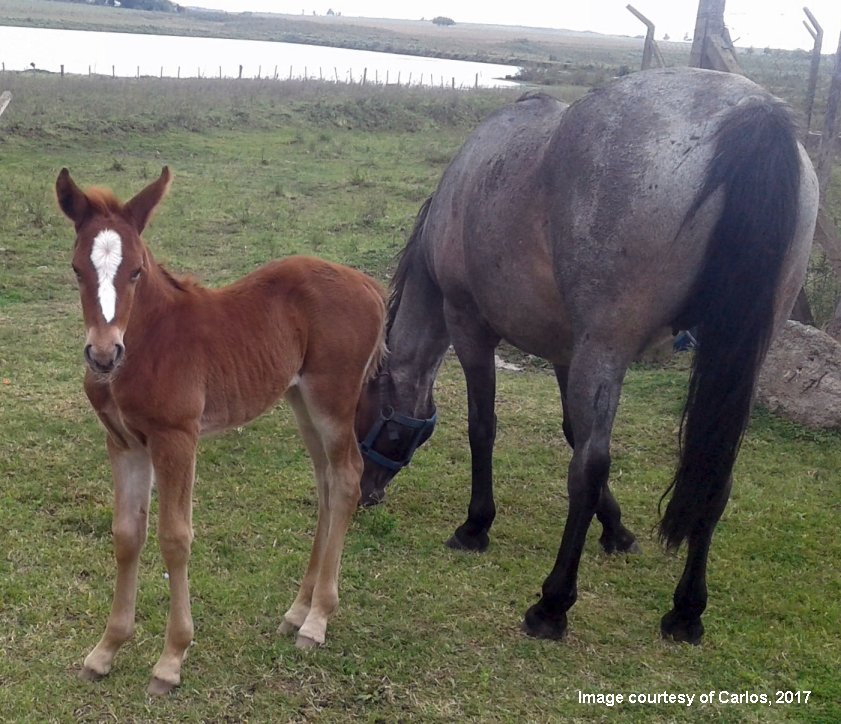
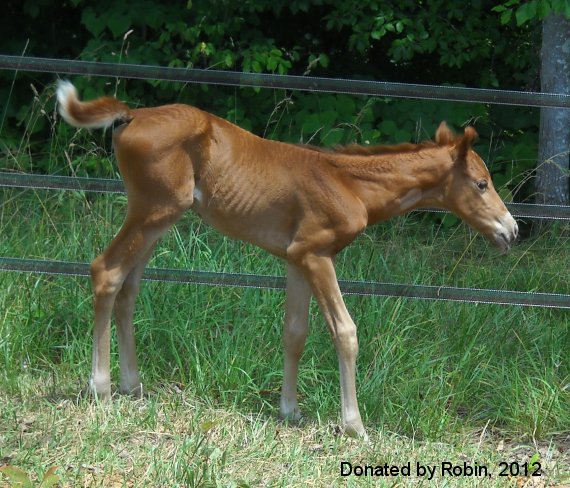
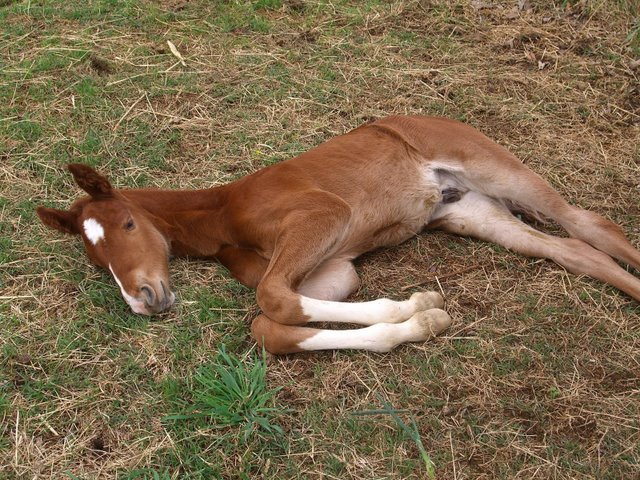
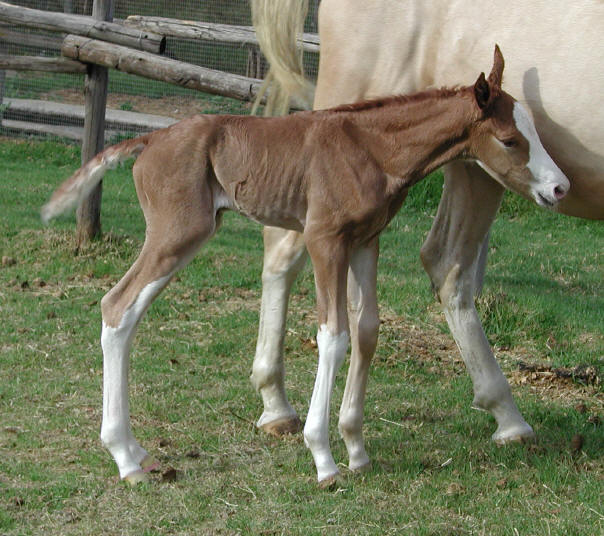
Typical characteristics:
-
Born sorrel or sorrel with tan/cream belly
-
Typically born with light/peach skin color that soon darkens.
Bay Foals
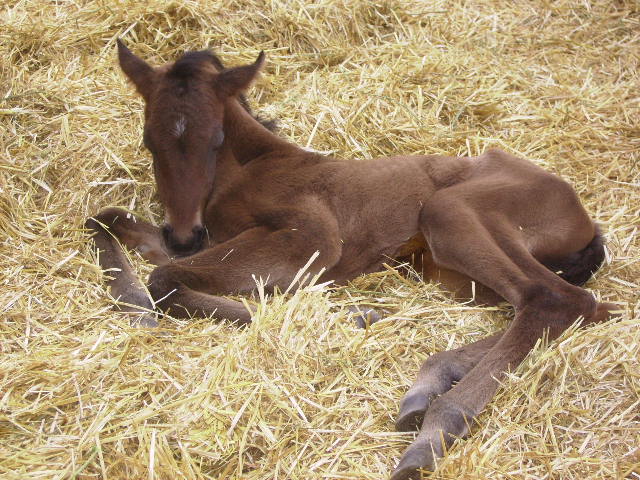
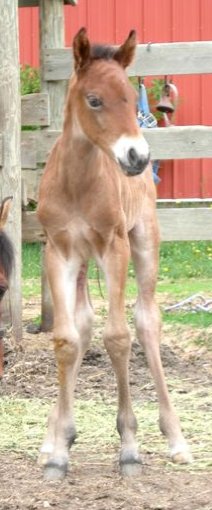
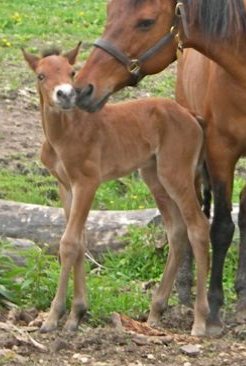
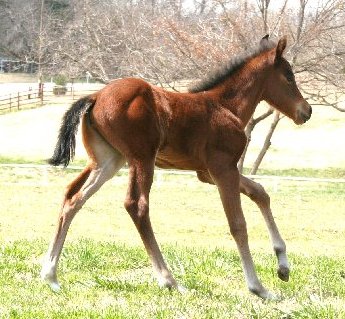
Typical characteristics:
-
Born bay, often with tan/buff legs that will shed off black later. Most bay foals' legs will shed off black up to around the knees/hocks, but a few will only be black up to about the fetlocks. These bays with "low black" are referred to as "wild bay."
-
Typically born with dark skin color.
Brown Foals
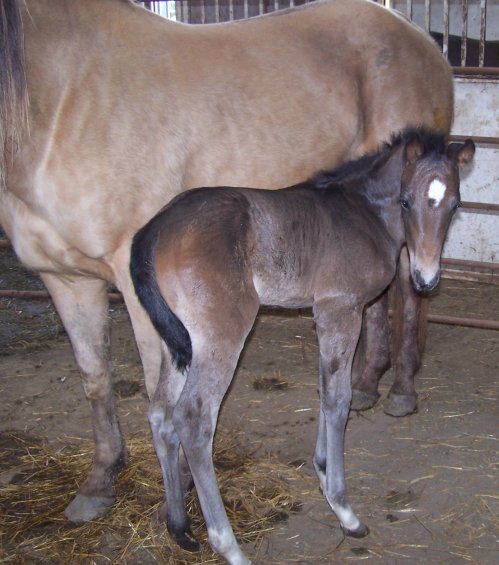
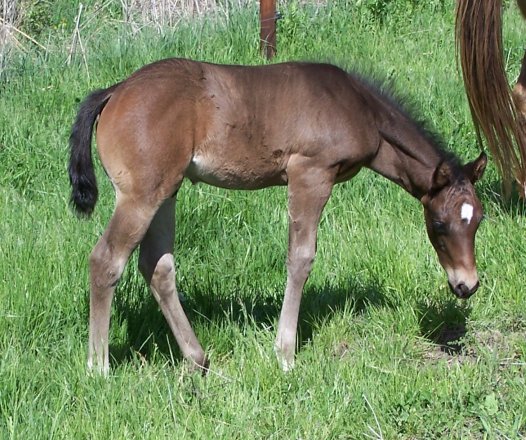
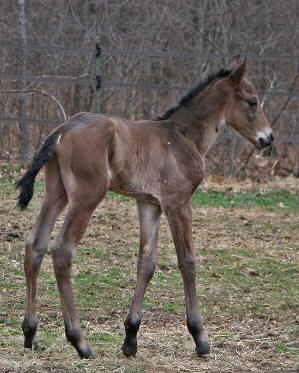
Typical characteristics:
-
Typically born with dark skin color. Legs are generally buff at birth (though sometimes black) and shed off black later.
-
Often have silvery hair between the back legs and on flanks.
-
After shedding the foal hair coat, may look like extremely dark bays or almost like a black, but typically have lighter reddish/gold hairs at the flanks, elbows, and above the nostrils on the muzzle.
-
The above foals are not tested for At (and that test is no longer offered, as it wasn't accurate), so could be dark bay. At this last updating, many people feel brown is just dark bay, but some that have a lot of experience with browns in their programs strongly feel (based upon their experiences) that brown is genetic. Time will tell.
Grullo Foals
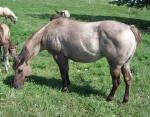
Dun gene + black, aa Agouti
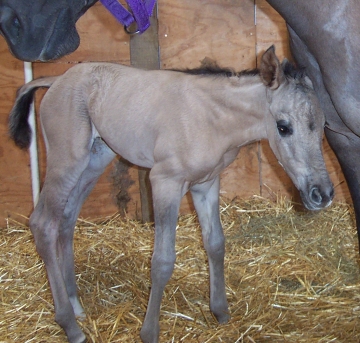
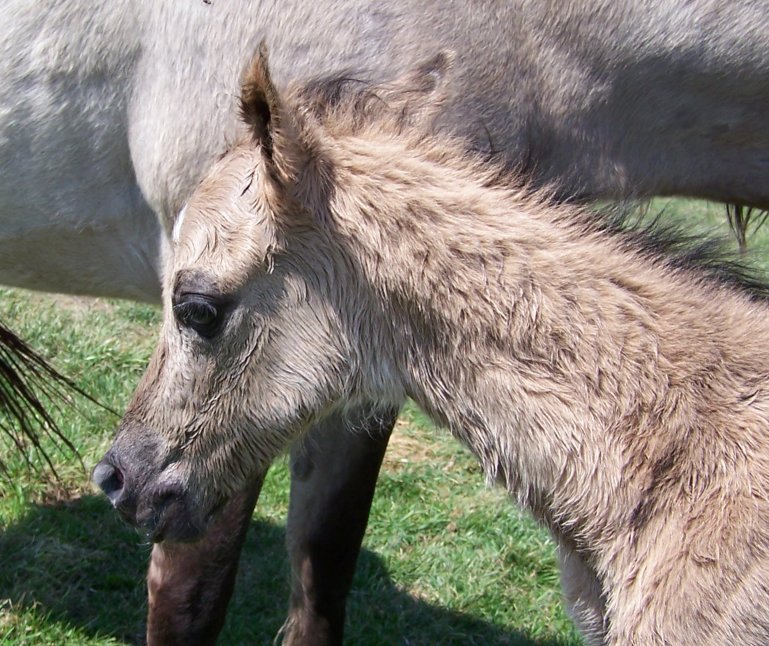
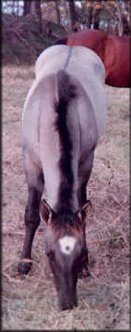
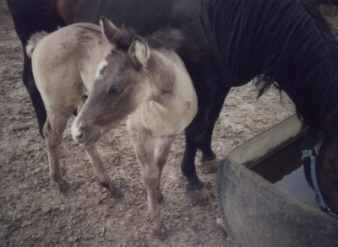
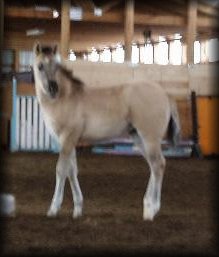
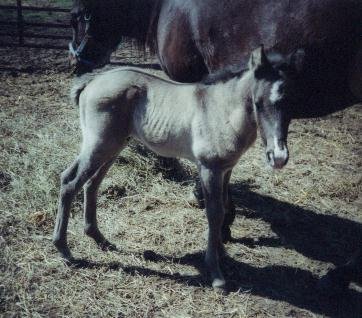
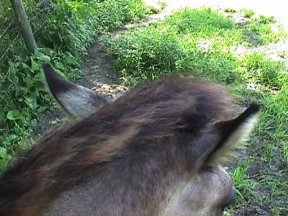
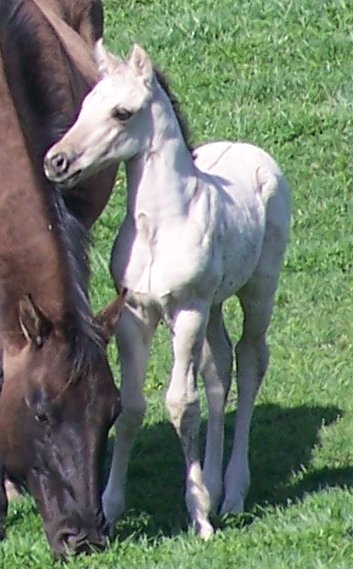
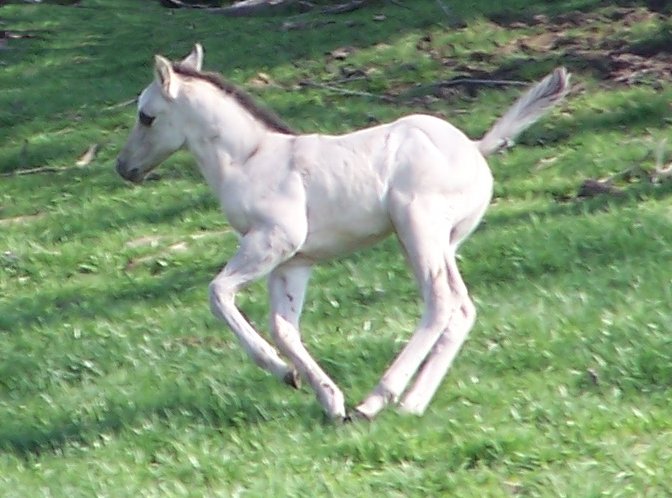
Typical characteristics:
-
Must have a parent that carries a dun gene
-
Charcoal face mask (usually not red or brown). Will quickly have charcoal-colored hair develop around eyes and muzzle, not gold or brown.
-
Usually have black dorsal stripes at birth
-
Dorsal stripe usually extends down into the tail...a solid black tail at birth is generally indicative of a buckskin, and not grullo.
-
"Most of the time" will have leg bars above and behind the knees
-
Often buff/cream/tan colored at birth.
-
Click here to compare a grullo foal with a dun and a buckskin.
Dun Foals
Dun gene + bay
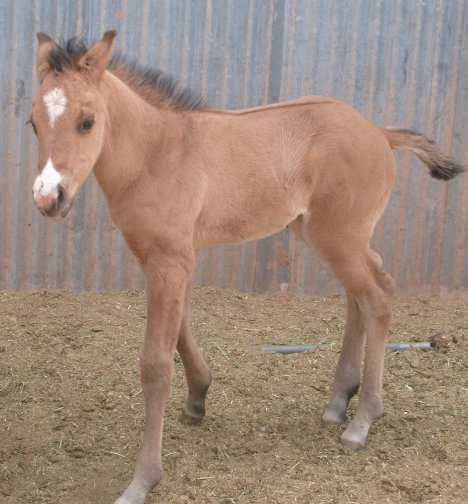
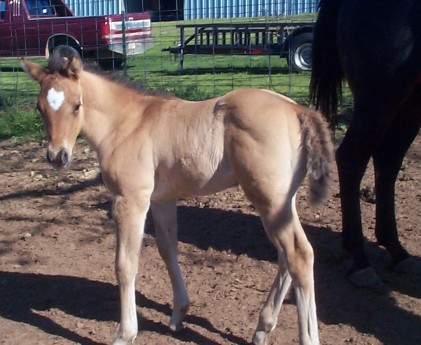
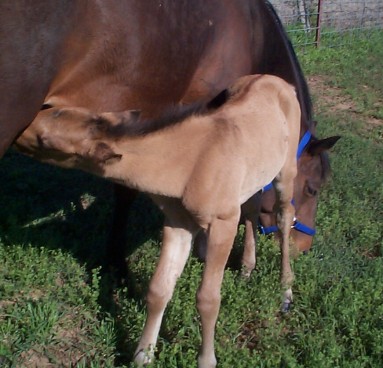
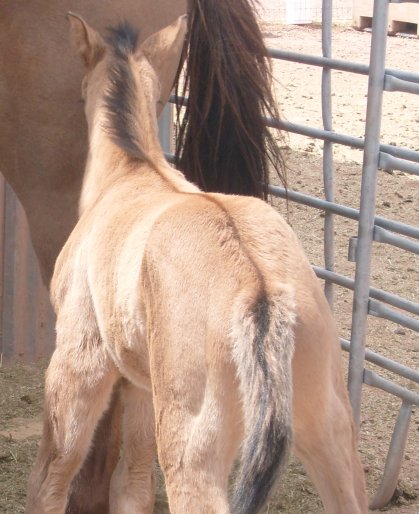
Typical characteristics:
-
This color would most properly be labeled "bay dun" instead of just "dun." Currently (2010), AQHA uses the single-word "dun" for registration still.
-
Must have a parent that carries a dun gene
-
Red or brown dorsal stripe at birth "usually." Dun foals do not "typically" have black dorsal stripes at birth.
-
Dorsal stripe usually extends down into the tail
-
Red or brown face mask between nostrils and eyes (across bridge of nose)
-
Body color tan, reddish tan or buff, but not full red-bay colored at birth
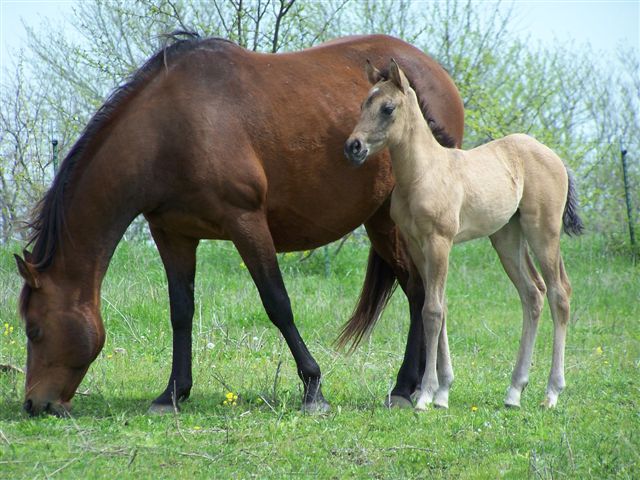
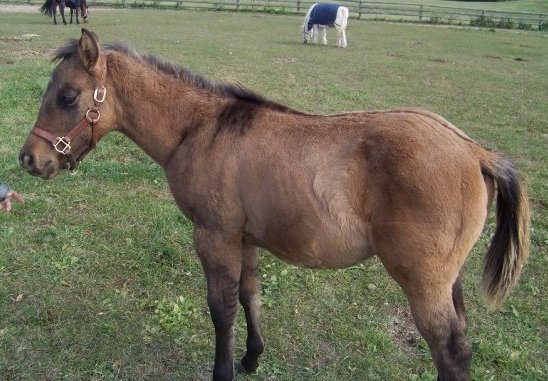
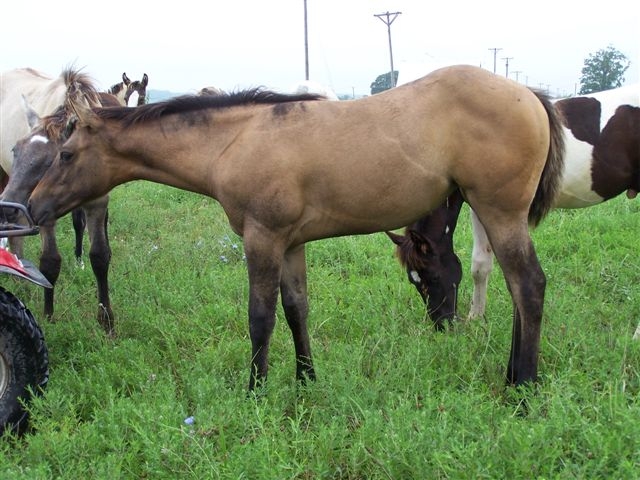
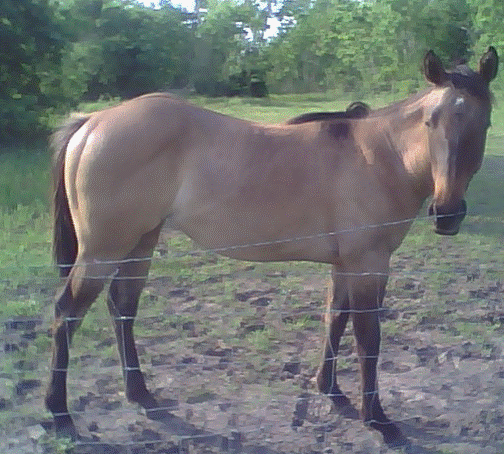
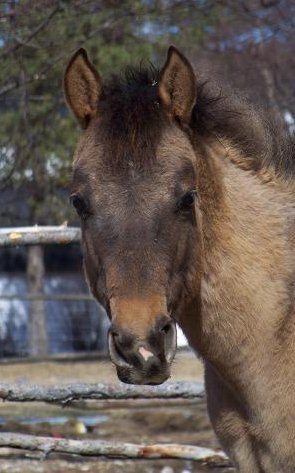
Suspected Brown-based Duns, below (Dun gene + brown)
This is slightly different from a Bay + Dun. The brown + dun combination
sometimes has a dark enough head that people mistakenly call the foals grullo.
However, as the foal matures, the telltale sign of the brown/gold lower face
becomes much more obvious, and the body turns more gold.
Red Dun Foals
Dun gene + sorrel
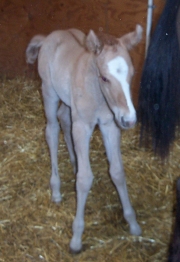
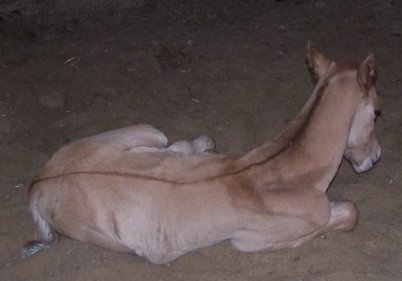
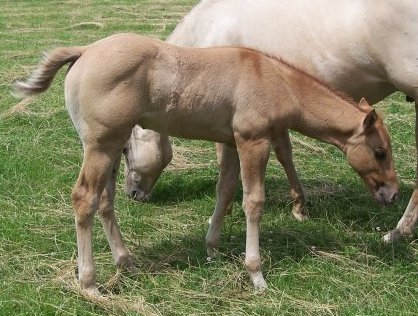
Typical characteristics:
-
Must have a parent that carries a dun gene
-
Reddish dorsal stripe at birth "usually"
-
Typically born with light/pink/peach skin color that later darkens.
-
Dorsal stripe usually extends down into the tail
-
The top 1/3rd of the back of the ear is usually orange/red
Sorrel Bay Brown Black Grullo Dun Red Dun
Buckskin Palomino Smoky Black Cremello Perlino Smokey Cream
Gold Champagne Amber Champagne Classic Champagne
Blue Roan Bay Roan Brown Roan Red Roan Gray Silver Dapple
Comparisons Tricky Examples Back to Top
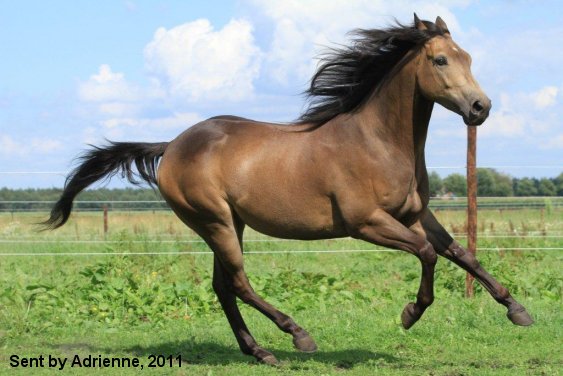
Buckskin Foals
Cream gene + bay or Cream gene + brown
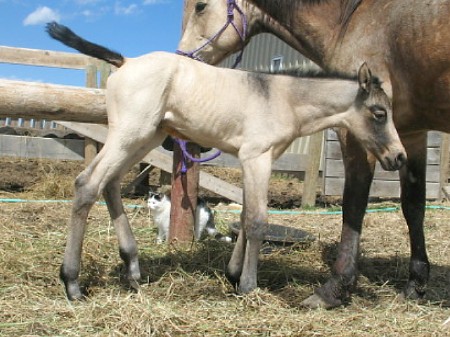
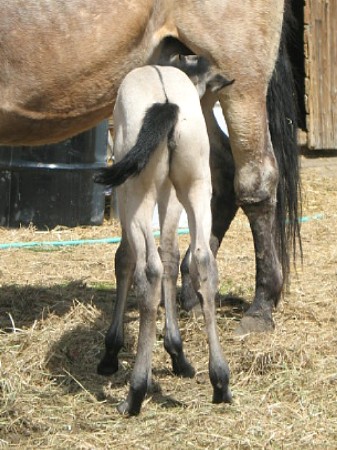
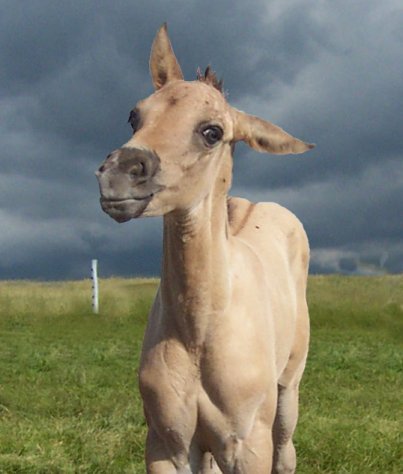
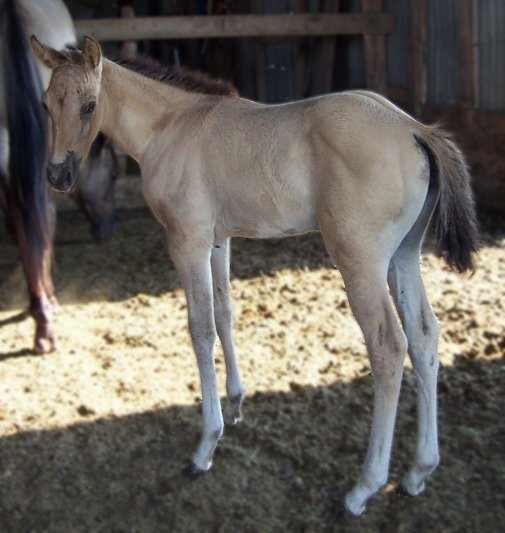
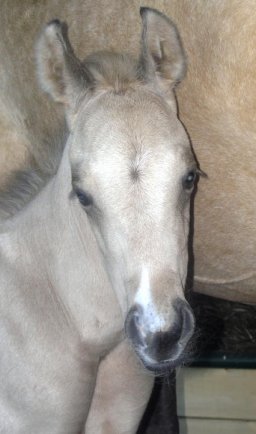
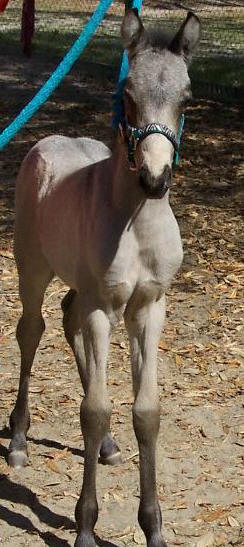
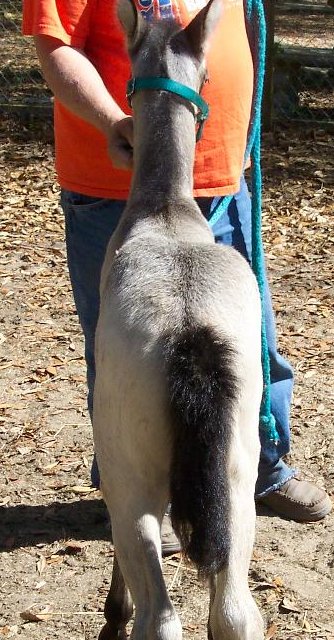
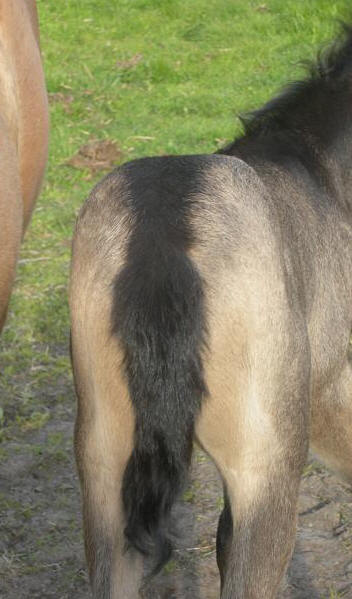
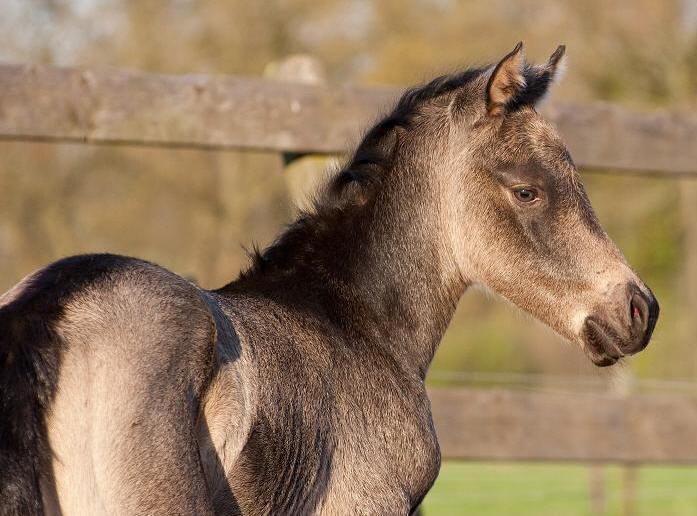
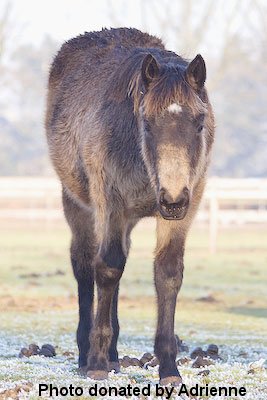
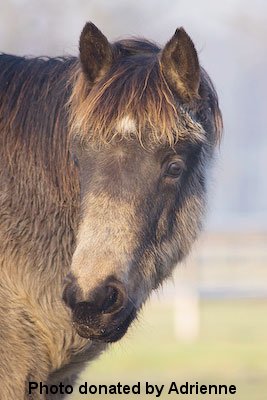
Typical characteristics:
-
Born buckskin or tan or cream, sometimes with blue-gray eyes
-
May or may not have a dorsal stripe at birth. Buckskin dorsal stripes will fade over time unless the foal is a dunskin, and inherited a dun gene from a dun-factored parent. Some retain some degree of countershading stripes on their backs throughout their lives.
-
Click here to see a picture of the foal in the last two pictures as a mature horse.
Palomino Foals
Cream gene + sorrel
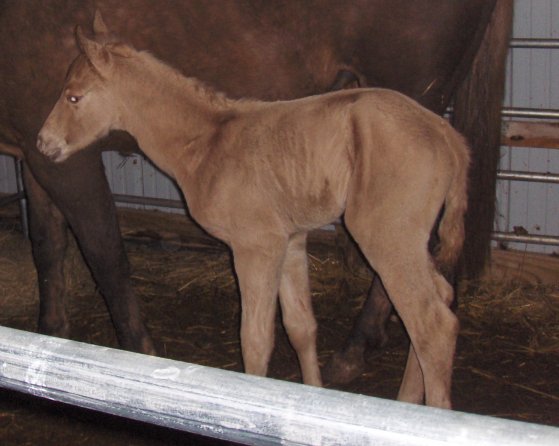
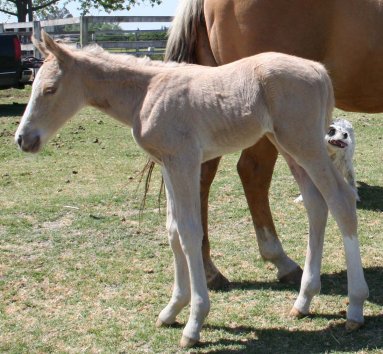
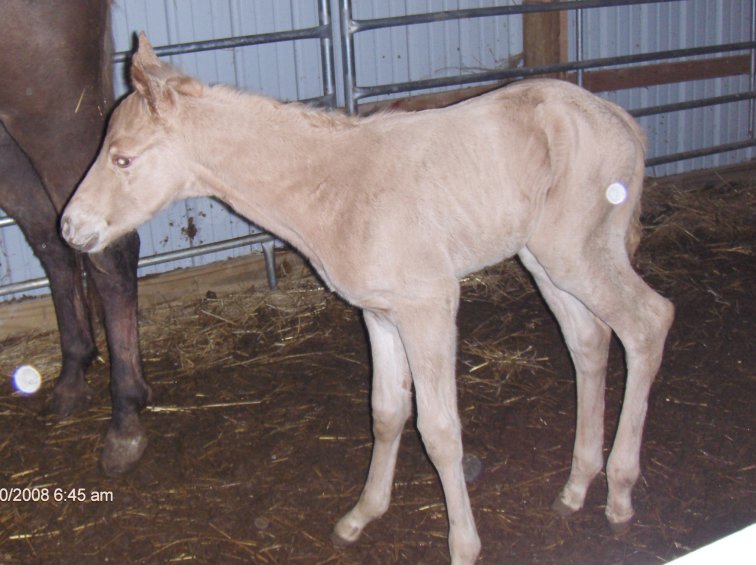
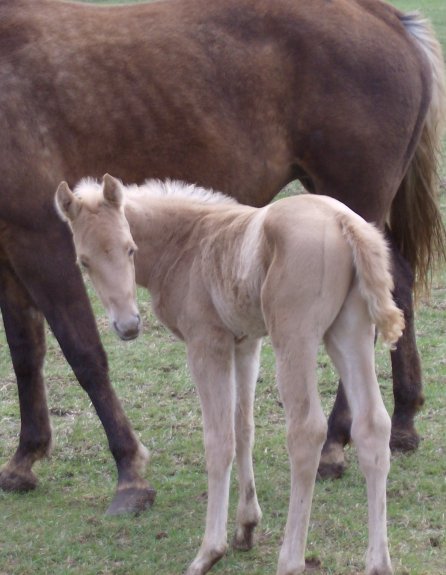
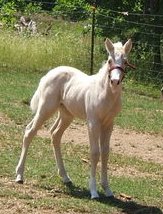
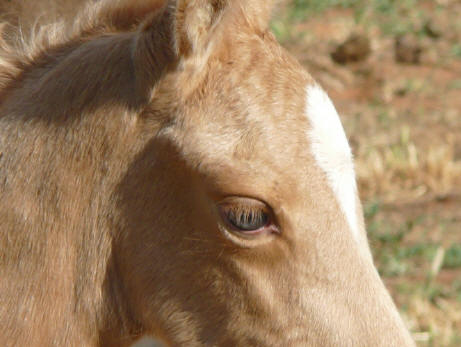
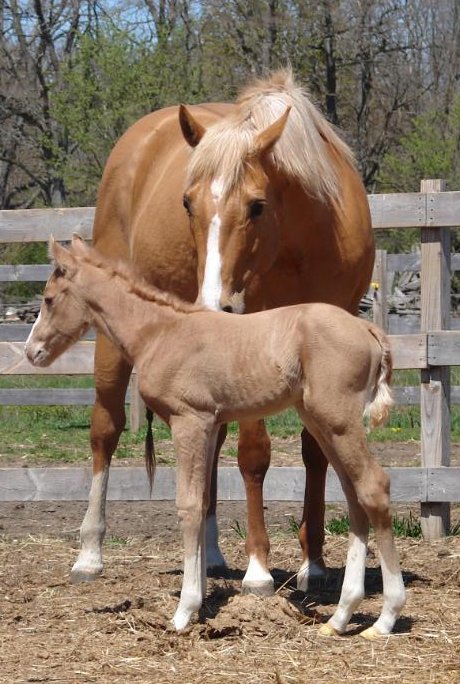
Typical characteristics:
-
Born palomino, peachy-colored, or cream colored, sometimes with blue-gray eyes.
-
May have peachy-colored skin at birth that darkens over time.
-
May have a darker mane and tail (orange) that turn white/light over time
-
May or may not have a dorsal stripe at birth. Palomino dorsal stripes will fade over time unless the foal is a dunalino, and inherited a dun gene from a dun-factored parent. Some retain some degree of countershading stripes on their backs throughout their lives.
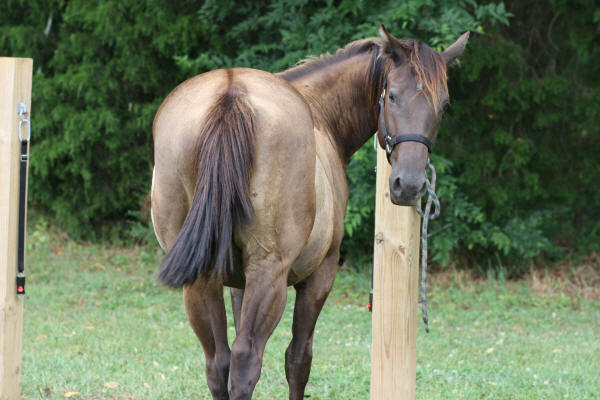
Smoky Black Foals
Black (aa Agouti) plus a Cream gene
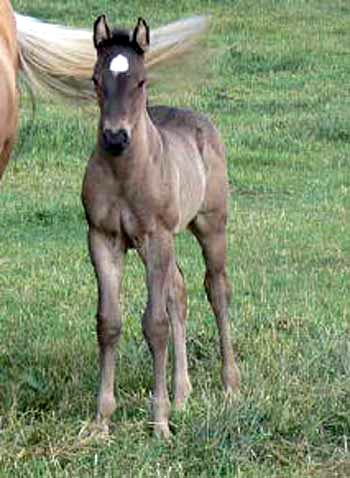
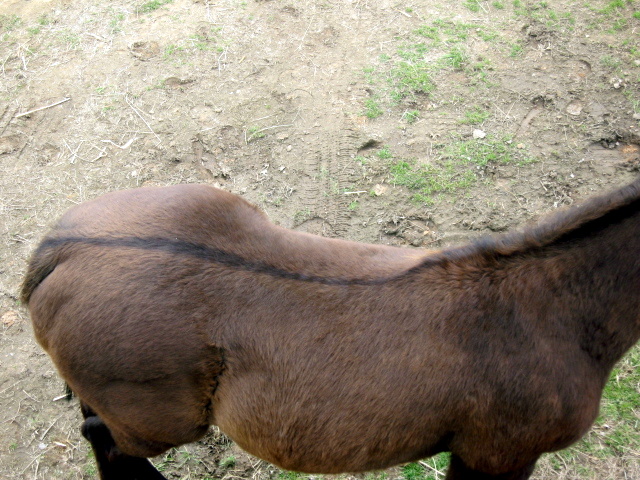
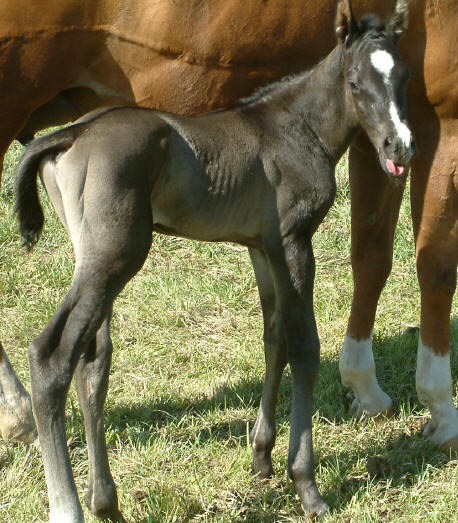
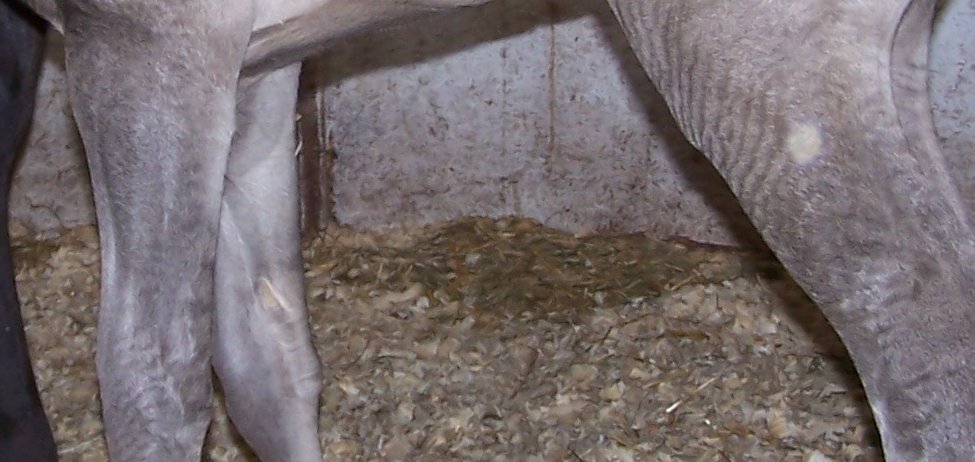
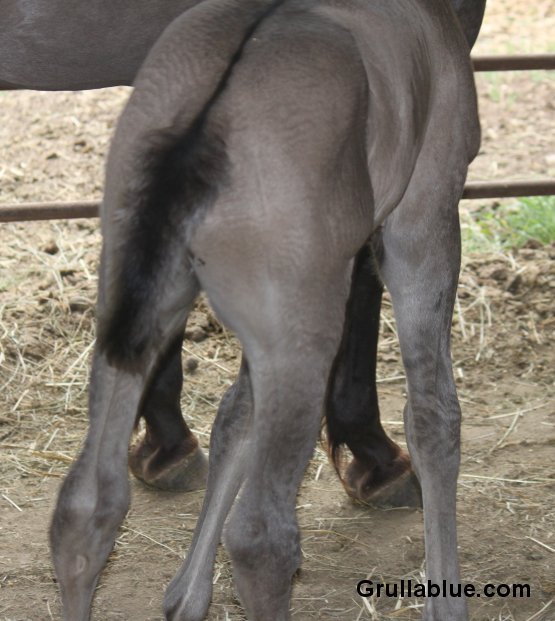
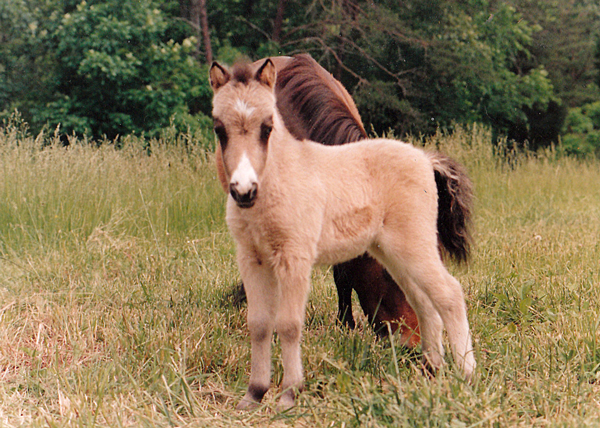
The foal on the right is a mini...mini foals seem to have more
"freedom of expression" than large breeds!
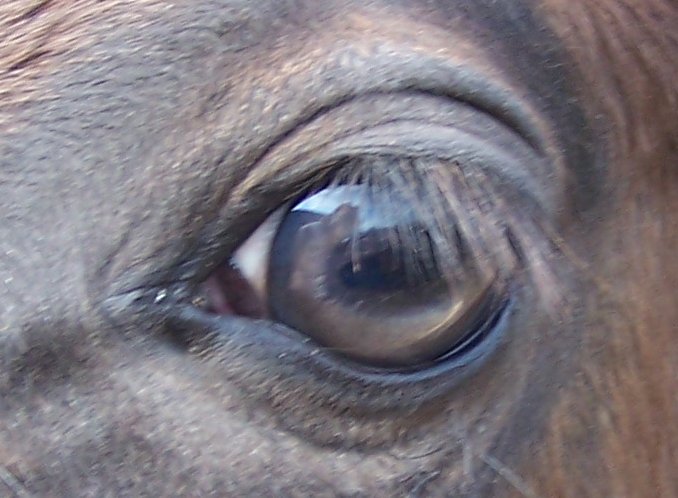
A smoky black is a black horse that also has one cream gene. The cream gene turns bays to buckskin, and sorrels to palominos. On a black horse, the cream gene does not markedly change the color, though we feel that some smoky blacks sun fade more than non-smoky blacks.
Typical characteristics:
-
Sometimes born with dark blue-gray eyes, like buckskin and palomino foals possess. The eyes turn brown as the foal matures.
-
May be born looking like a typical black, but may sun fade worse during warm seasons. Click here to see a photo of a smoky black that has faded.
-
Sometimes have more pronounced countershading stripes due to sun fade
-
Visit this page to see what smoky black foals might look like at/near maturity.
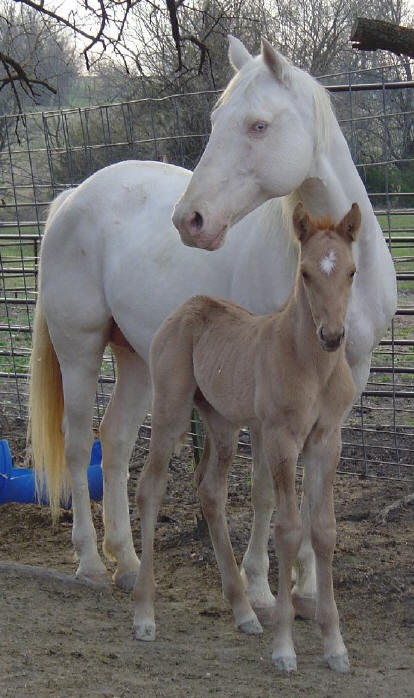
Cremello Foals
Sorrel/Chestnut with two cream alleles
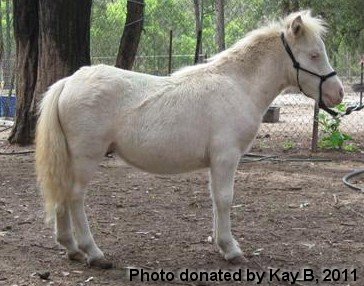
Typical characteristics:
-
Born with ice blue eyes and pink skin
-
Nearly white all over, without darker legs, mane, or tail "usually."
-
Will test ee for the Red Gene (not black), as cremellos are sorrel/chestnut with two cream alleles.
Perlino Foals
Bay with two cream alleles
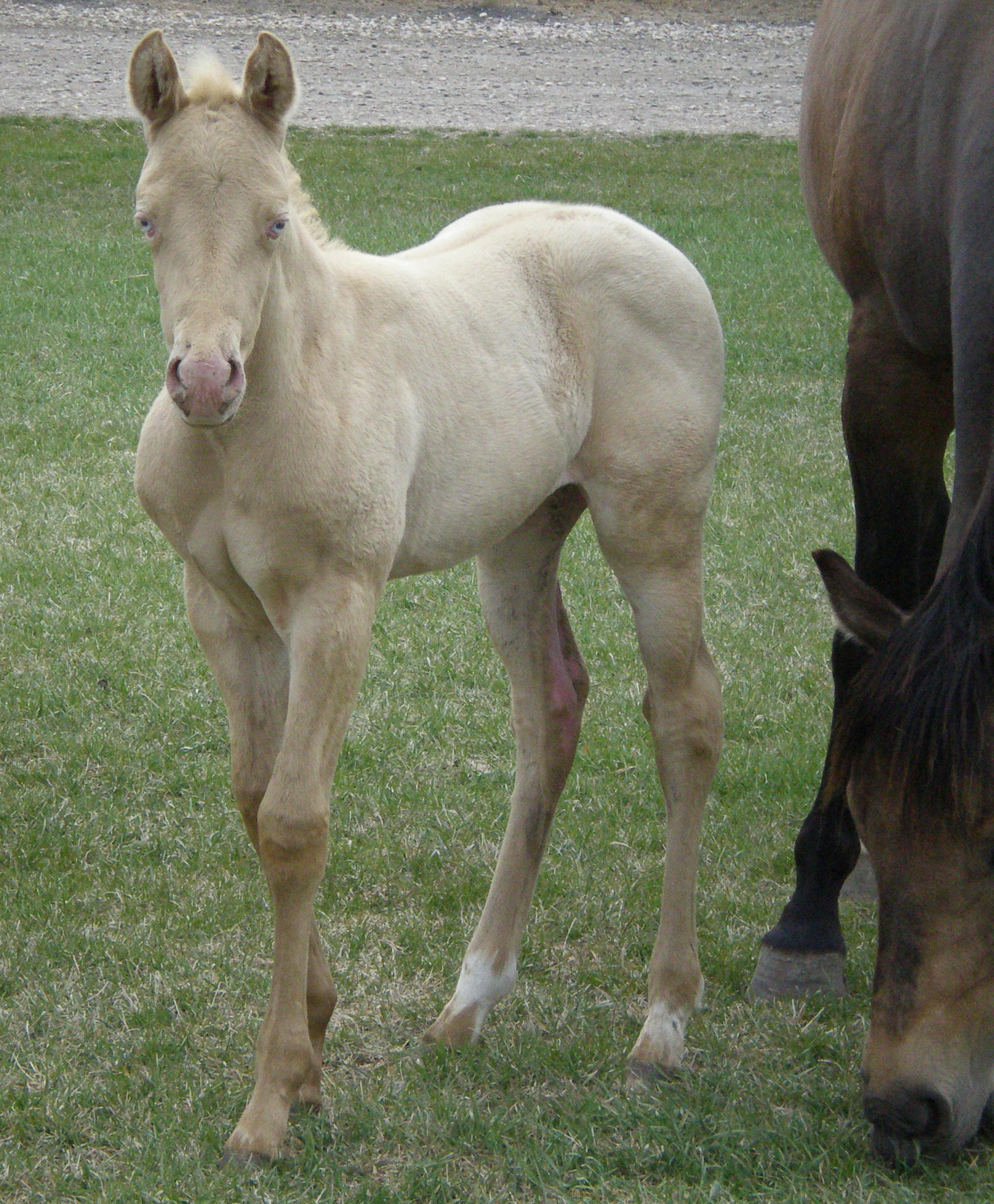
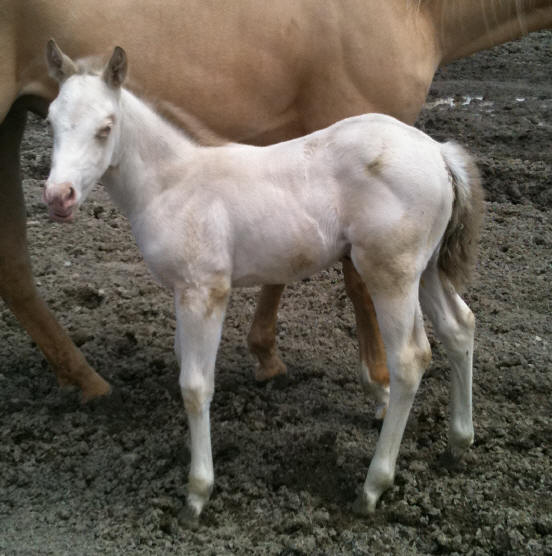
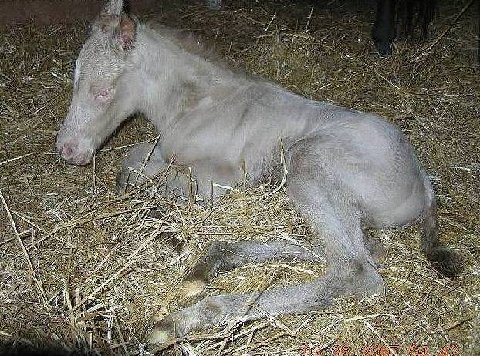
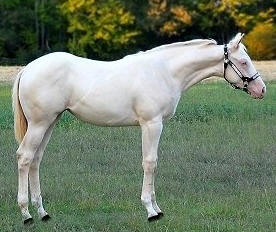
Typical characteristics:
-
Born with ice blue eyes and pink skin
-
Slightly darker legs, mane, and tail compared to cremello foals "usually."
-
Will test positive for one non-red gene or two non-red genes (Ee or EE), and will be AA or Aa for Agouti
Smokey Cream Foals
Black with 2 cream alleles (looks much like Perlino, above)
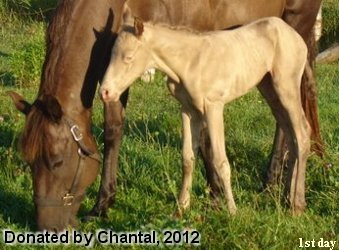
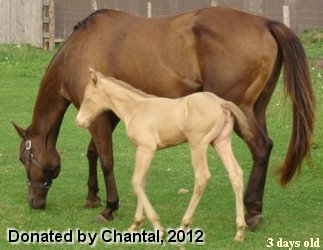
Typical characteristics:
-
Born with ice blue eyes and pink skin
-
Slightly darker legs, mane, and tail compared to cremello foals "usually."
-
Will test positive for one non-red gene or two non-red genes (Ee or EE), and will be aa for Agouti. The Agouti test result is the main difference between Smokey Cream (smoky cream) foals and Perlino foals. Perlinos will be AA or Aa, and Smoky Creams will be aa.
Gold Champagne Foals
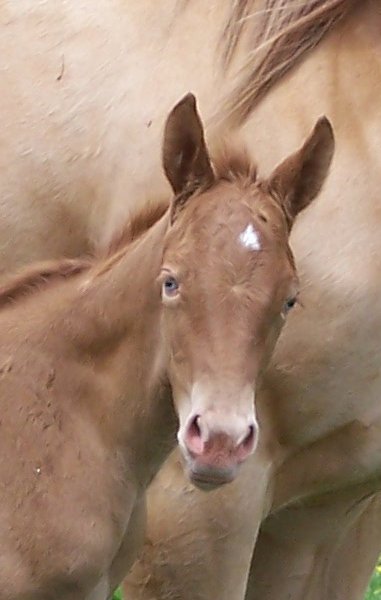
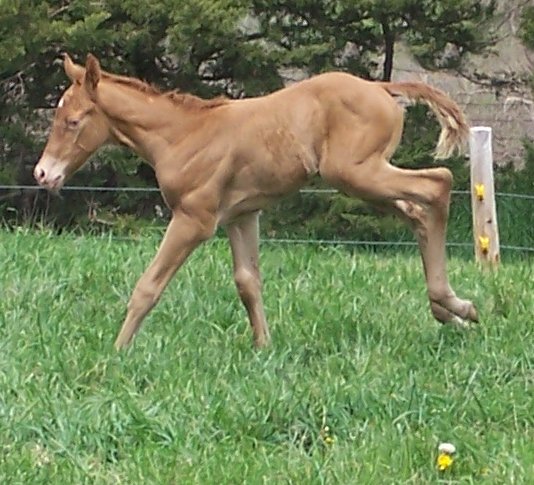
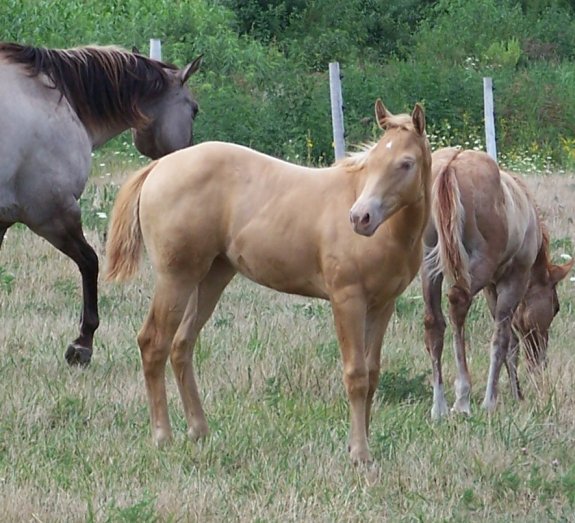
Typical characteristics:
-
Born with pink/peachy colored skin, blue eyes
-
Hair color lightens as foal matures, and eyes change from blue to amber/light brown
Amber and Sable Champagne Foals
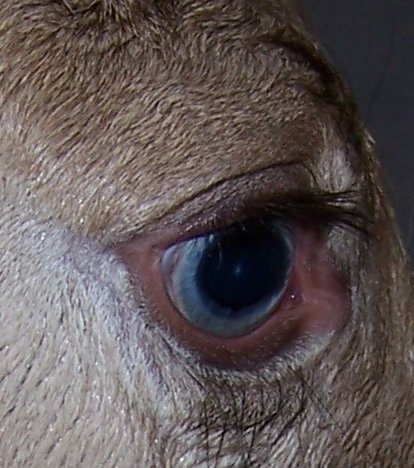
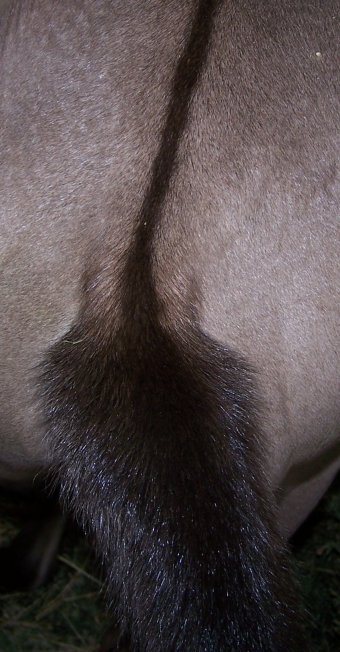
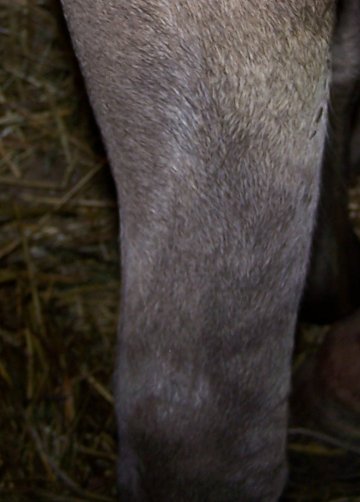
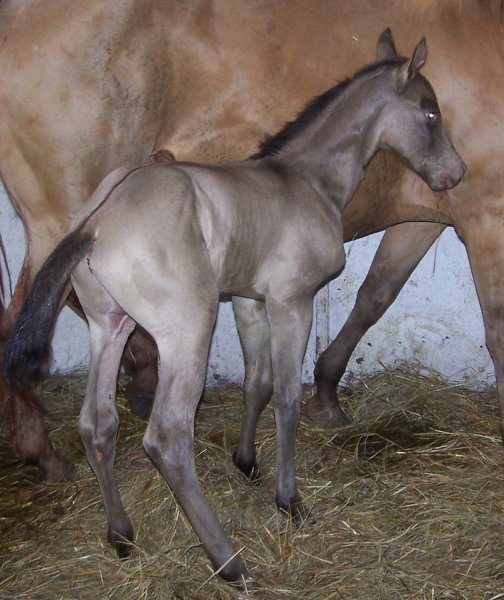
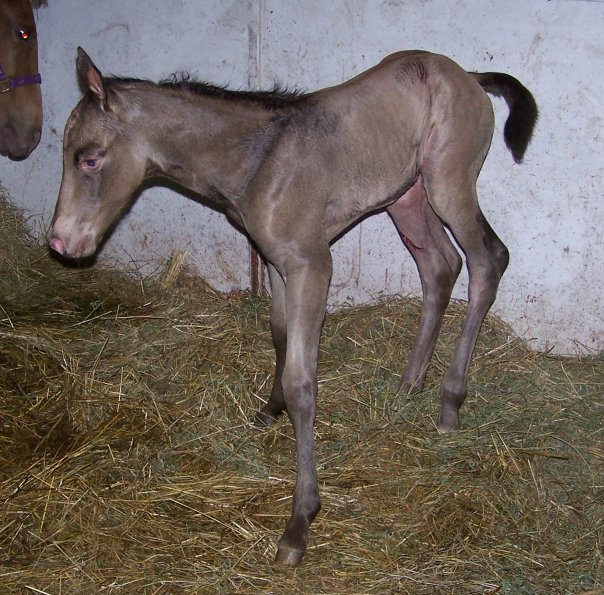
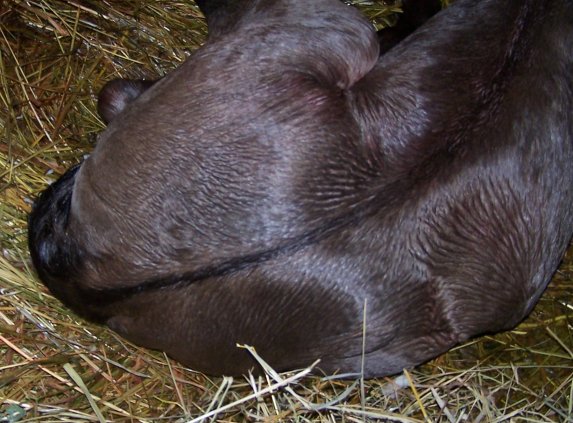
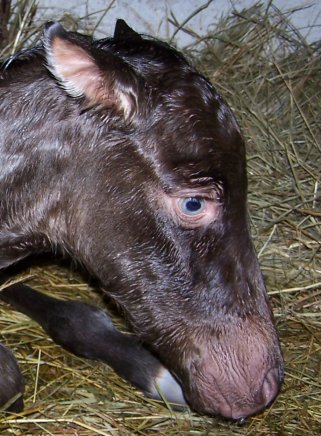
Typical characteristics:
-
Amber and Sable champagnes are the result of champagne on a bay (amber) or brown (sable) coat. Later, I will separate these two colors, once I have more photos of genetically-tested A vs At + champagne foals.
-
Born with pink/peachy colored skin, blue eyes
-
Hair color lightens as foal matures, and eyes change from blue to amber/light brown
-
More Info Coming Soon...
Classic Champagne Foals
|
|
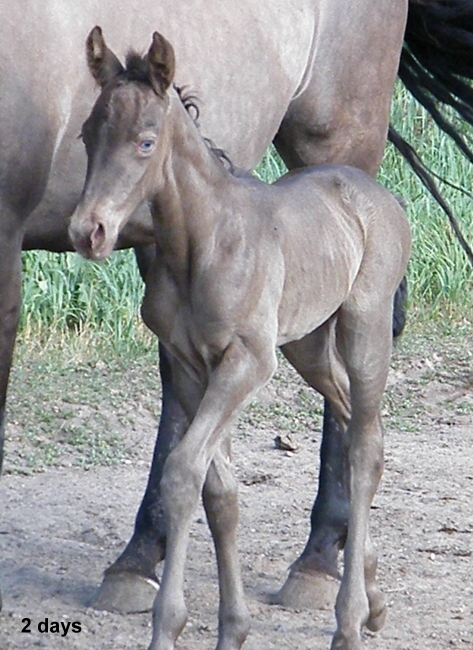 |
Typical characteristics:
-
Born with pink/peachy colored skin, blue eyes
-
Hair color lightens as foal matures, and eyes change from blue to amber/light brown
-
More Info Coming Soon...
Sorrel Bay Brown Black Grullo Dun Red Dun
Buckskin Palomino Smoky Black Cremello Perlino Smokey Cream
Gold Champagne Amber Champagne Classic Champagne
Blue Roan Bay Roan Brown Roan Red Roan Gray Silver Dapple
Comparisons Tricky Examples Back to Top
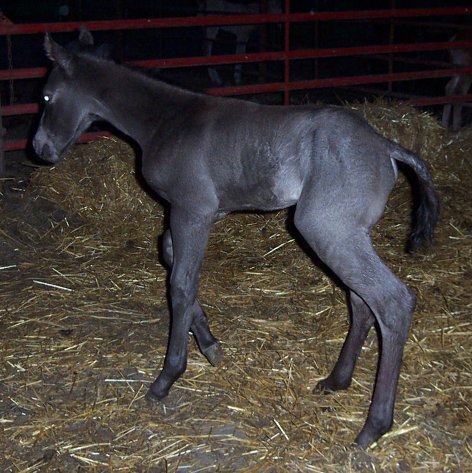
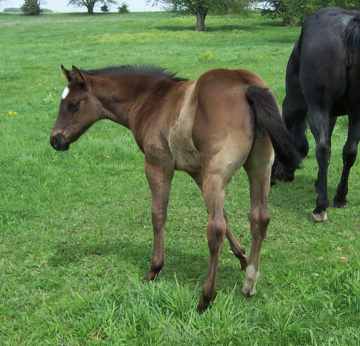
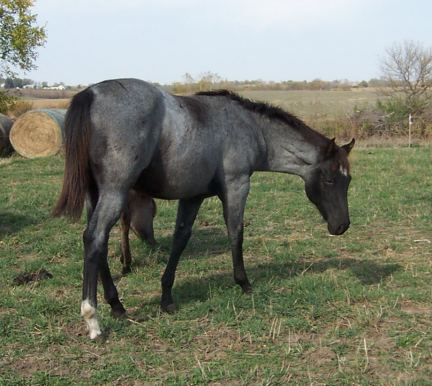
Blue Roan Foals
Roan gene + black
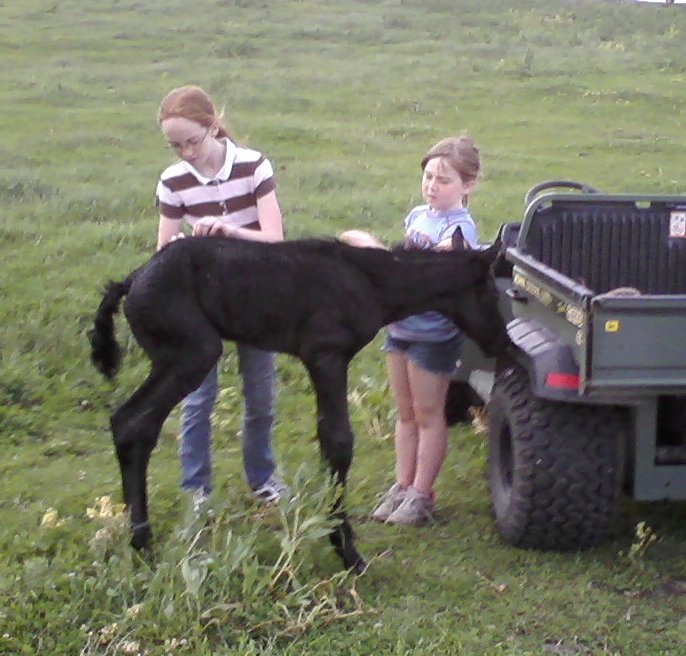
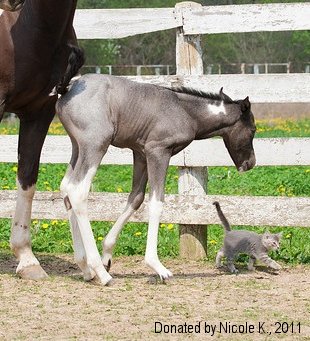
Typical characteristics:
-
Must have a parent that carries a roan gene
-
Born black or charcoal colored, sometimes brownish
-
May or may not show roaning on hips before 2 months, but should be obviously roan before weaning age.
-
Roaning should NOT "just" be visible at the flanks. A true roan, as it sheds its foal coat, will show obvious roaning on the sides and tops of hips, sides of neck, and ribcage. Very few, if any, exceptions....roaning at the flanks, but not elsewhere, is an example of rabicano gene expression usually.
Bay Roan Foals
Roan gene + bay
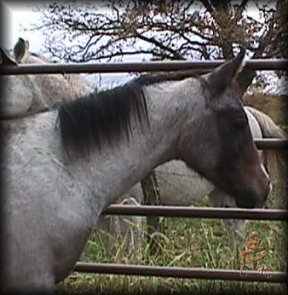
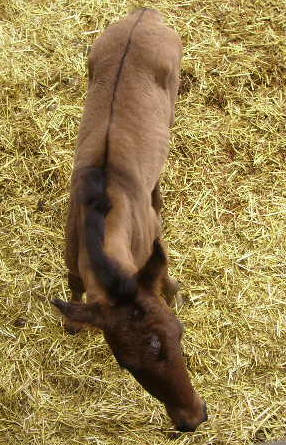
Typical characteristics:
-
Must have a parent that carries a roan gene
-
Born bay, often with buff/tan legs that later turn black
-
May or may not show roaning on hips before 2 months, but should roan before weaning age.
-
Roaning should NOT "just" be visible at the flanks. A true roan, as it sheds its foal coat, will show obvious roaning on the sides and tops of hips, sides of neck, and ribcage. Very few, if any, exceptions....roaning at the flanks, but not elsewhere, is an example of rabicano gene expression usually.
Brown Roan Foals
Roan gene + brown (E_, AtAt)
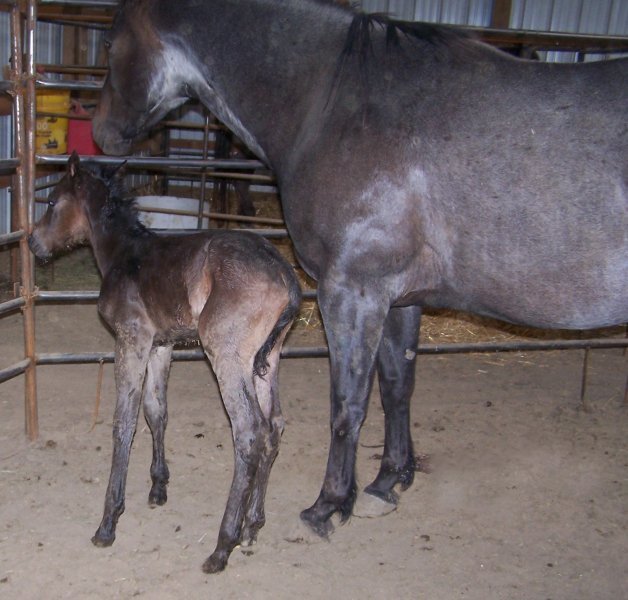
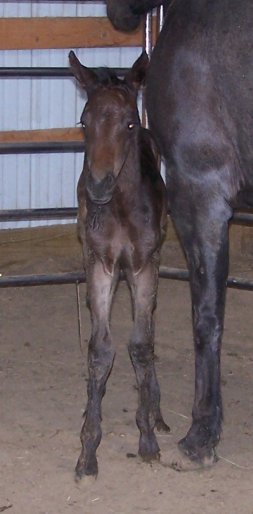
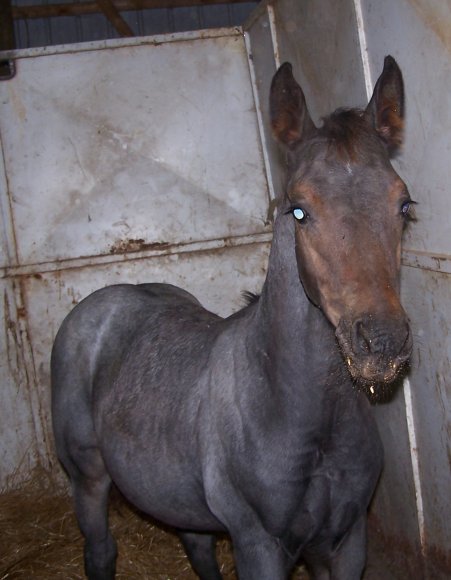
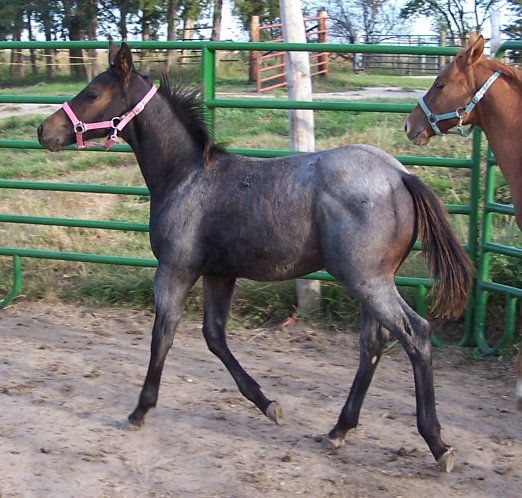
The above foal is suspected of being a brown roan, but could be a bay roan.
Typical characteristics:
-
Must have a parent that carries a roan gene
-
Born looking like a typical brown foal, often with buff/tan legs that later turn black
-
May or may not show roaning on hips before 2 months, but should roan before weaning age.
-
Roaning should NOT "just" be visible at the flanks. A true roan, as it sheds its foal coat, will show obvious roaning on the sides and tops of hips, sides of neck, and ribcage. Very few, if any, exceptions....roaning at the flanks, but not elsewhere, is an example of rabicano gene expression usually.
-
Brown roans are often mistakenly called blue roans. They are NOT genetically the same, and their heads are a different color than true blue roans. Genetically, they are closer to bay roan than to blue roan. In fact, some brown roans can not even have true blue roan offspring.
-
Click here to see more photos.
Red Roan Foals
Roan gene + sorrel/chestnut
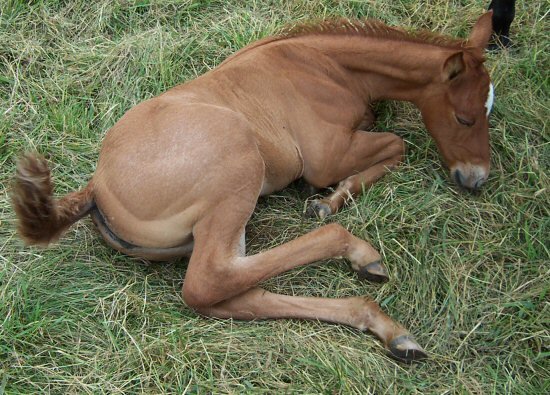
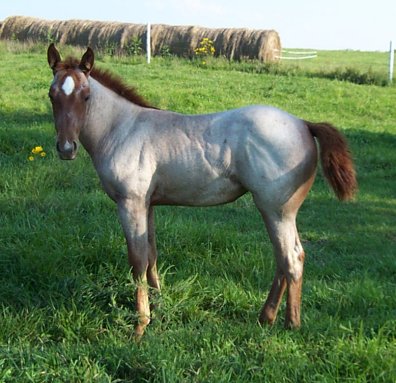
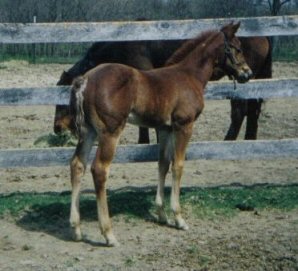
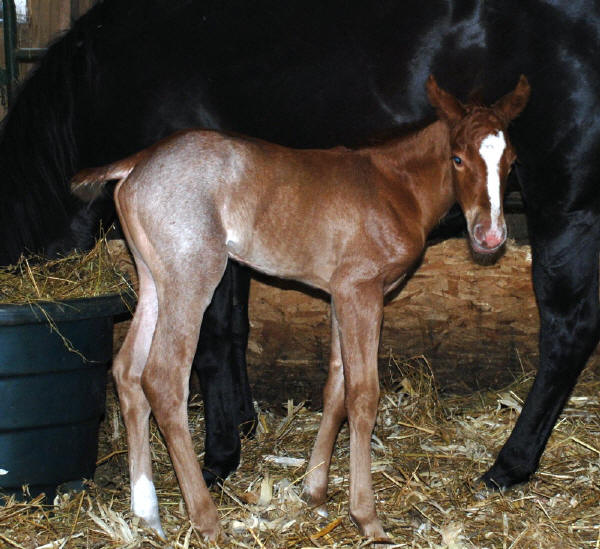
Typical characteristics:
-
Must have a parent that carries a roan gene
-
Born sorrel or chestnut, probably with light pink/peach skin color.
-
May or may not show roaning on hips before 2 months, but should roan before weaning age.
-
Roaning should NOT "just" be visible at the flanks. A true roan, as it sheds its foal coat, will show obvious roaning on the sides and tops of hips, sides of neck, and ribcage. Very few, if any, exceptions. Roaning at the flanks, but not elsewhere, is an example of rabicano gene expression usually.
Gray Foals
Any color + gray
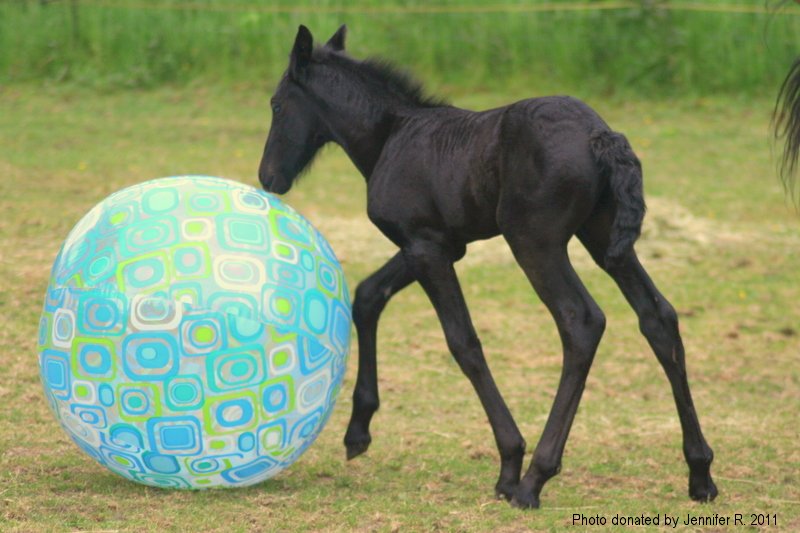
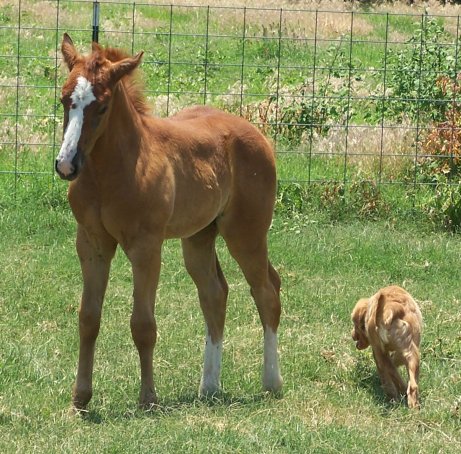
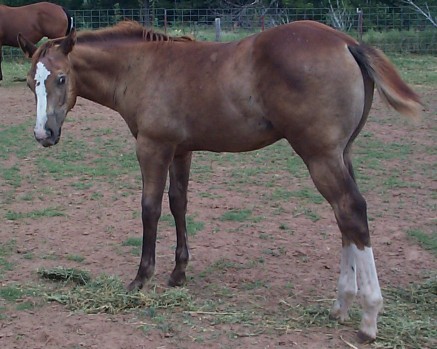
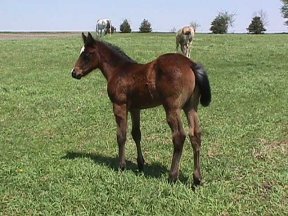
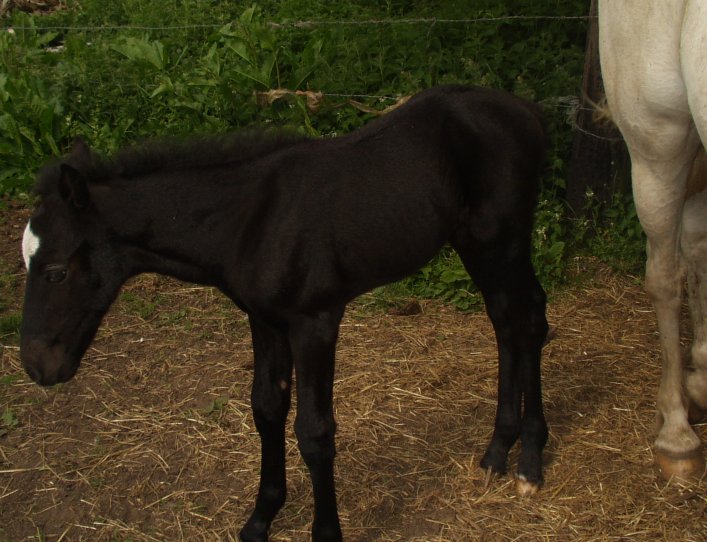
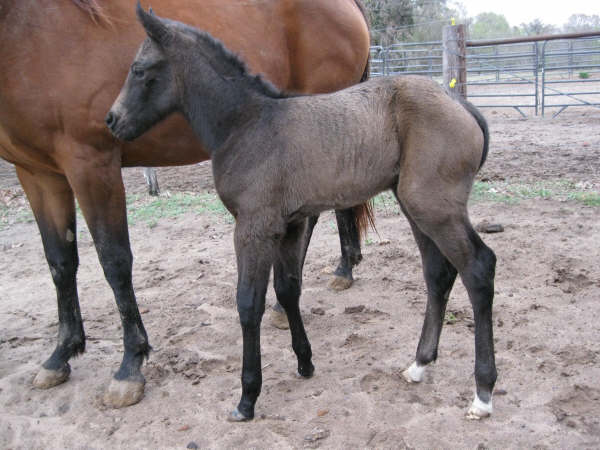
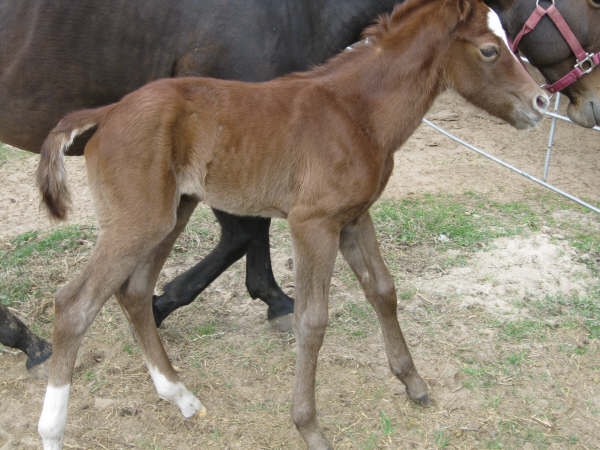
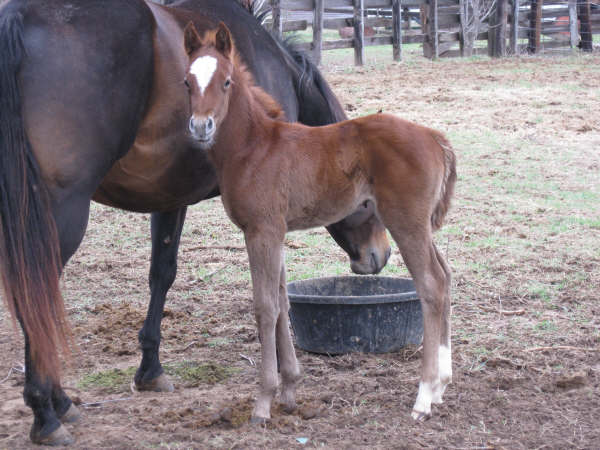
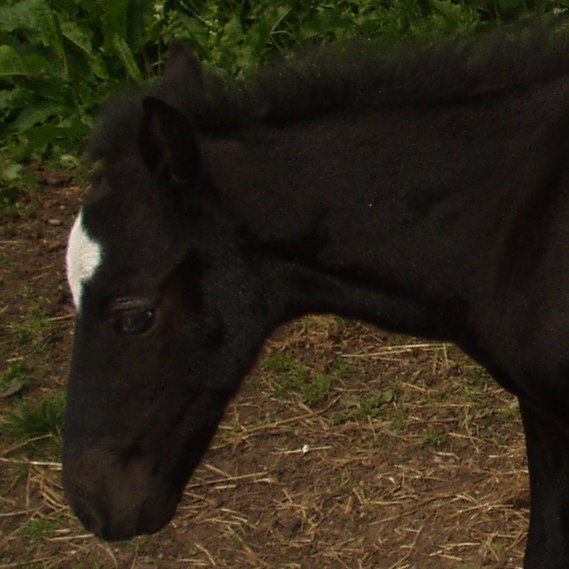
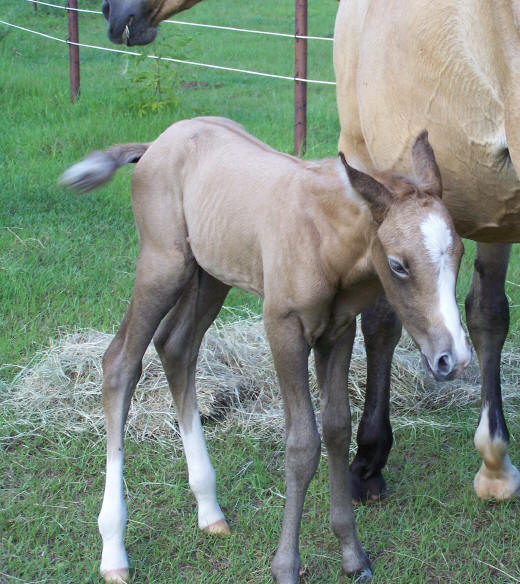
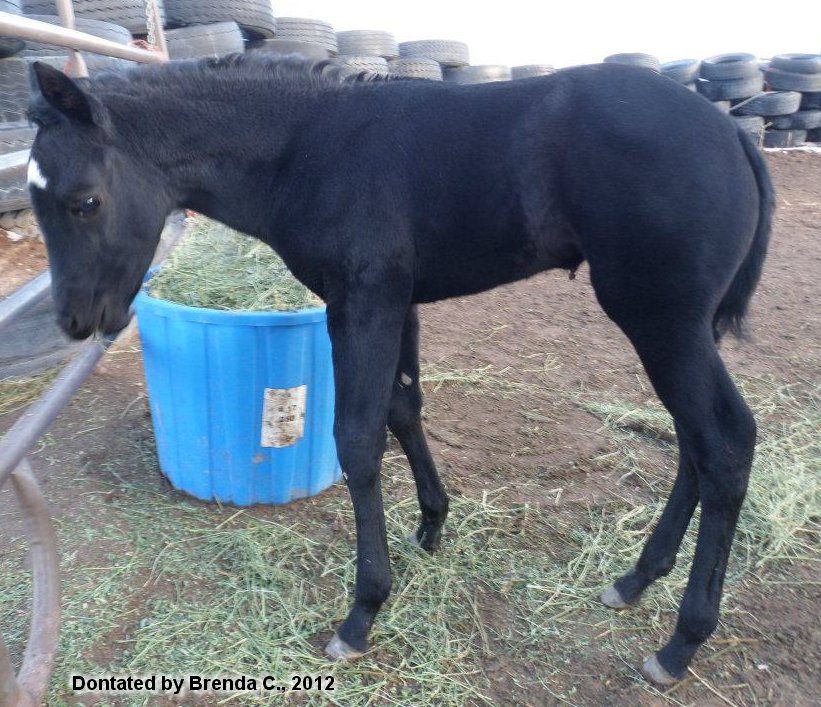
Note the dark legs of the newborns, and that you can sometimes see gray around
the eyeballs very early.
Typical characteristics:
-
Born any color
-
Base colors with black legs (such as bay and black) that will turn gray are often born WITH black or unusually-dark legs. Non-graying foals that will eventually have black legs often have buff or gray legs at birth instead of shiny black legs at birth.
-
When born with a base color of sorrel, gray foals generally have dark skin. Normal (not-graying) sorrels are born with pink/peach skin color usually.
-
Often, gray hairs can be seen near the eyeballs immediately or within a couple months of birth (see photos above).
-
Click here to see mature gray horses.
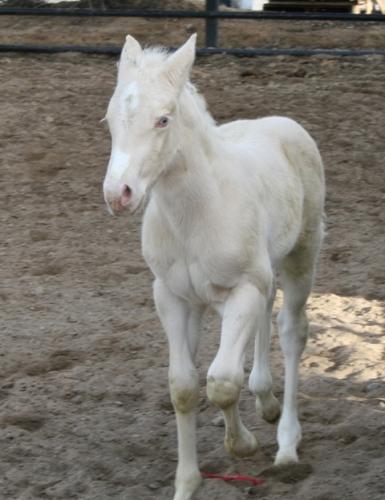
Pearl
Pearl Dilution
-
If there is only one copy of the Pearl gene, no effect is seen on black, bay or chestnut horses. If there are two copies, the Pearl gene lightens red coats to a pale, uniform apricot color that includes body, mane and tail and creates pale skin.
-
The Pearl gene is also known to interact with the cream gene to enhance its effects and, in horses with only one copy of the cream allele, to create "pseudo-double dilutes" sometimes called pseudo-cremellos or pseudo-smoky cream. A pseudo-double dilute will often have pale skin and blue or green eyes. It is difficult if not impossible to tell a double cream dilute from a Pearl-cream pseudo dilute without genetic testing. (source: Wikipedia)
Silver Dapple
Silver Black, Silver Bay, Silver Buckskin, etc.
|
|
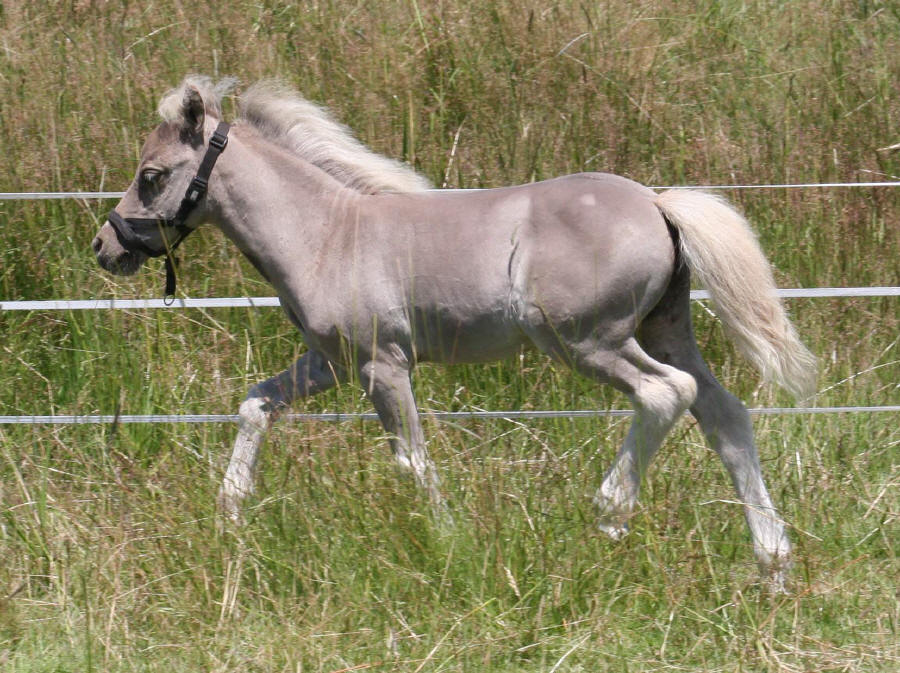 Silver Dapple + Grullo + Cream (Agouti = aa) |
 Silver Black: Silver dapple gene on black (Agouti = aa) |
Silver dapple is a dilution gene that is rare (but does exist) in quarter horses.
It expresses itself visually if the foal/horse has a non-red (black) gene, and therefore silver is not supposed to affect sorrel/chestnut horses.
Bay and black horses with a silver gene will have lightened manes/tails. Black plus silver dapple often results in a diluted and dappled body color. Some of the shades of silver dapple horses include:
~silver black
~silver bay
~silver brown
~silver chestnut (lacks visual evidence of silver gene)
~combinations with other colors and patters are possible, such as silver silver buckskin, bay roan, etc.Silver may also cause striped hooves and light-colored eyelashes (especially as foals).
Until recently, this gene was also referred to as "taffy."
Visit our QH Colors page to see some mature silver horses.
Sorrel Bay Brown Black Grullo Dun Red Dun
Buckskin Palomino Smoky Black Cremello Perlino Smokey Cream
Gold Champagne Amber Champagne Classic Champagne
Blue Roan Bay Roan Brown Roan Red Roan Gray Silver Dapple
Comparisons Tricky Examples Back to Top
Side-by-Side Comparisons
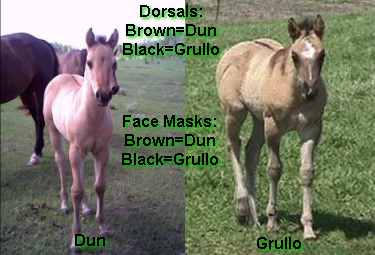 Dun (L) and grullo (R) |
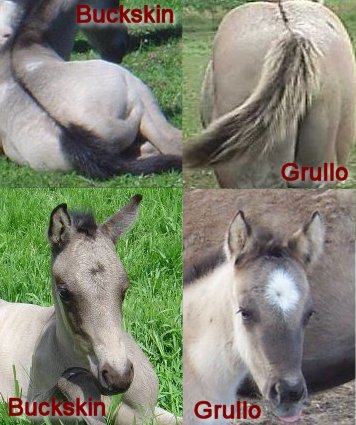 Buckskin (L) and grullo (R) |
Tricky Examples
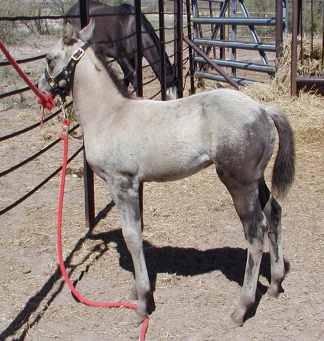
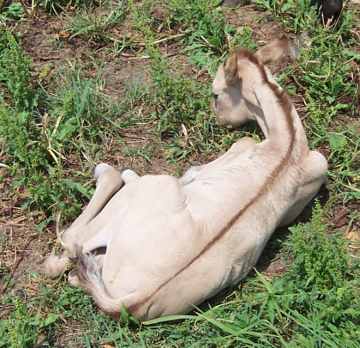
Sometimes, foal coat colors can baffle even experts. Clues are often there to tell us in advance if we recognize them...either the ancestors' genetics or slight visual clues. Here are some neat, but tricky, foal coat colors.
|
|
This foal is bay roan, but has an amazing countershading stripe and shoulder patch that will disappear over time. There are no duns in his pedigree, and he is not a dun. |
This is a tested/confirmed "Pearl" foal, and NOT a cremello. Click here and here to learn more about the pearl gene. |
|
|
|
|
|
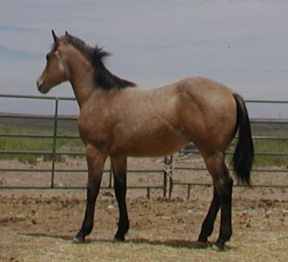
Composite Colors
I'm not including composite colors fully on this page because there are just too darned many color combinations. But here are a few examples of what foals can look like when they have more than one color-modifying gene.
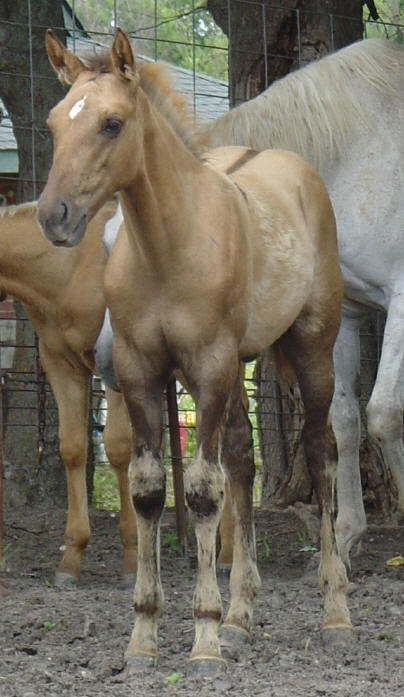 Dunalino (same foal both pics) Palomino + Dun Factor |
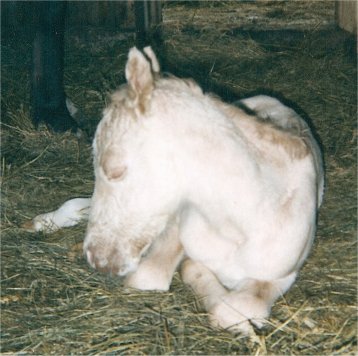
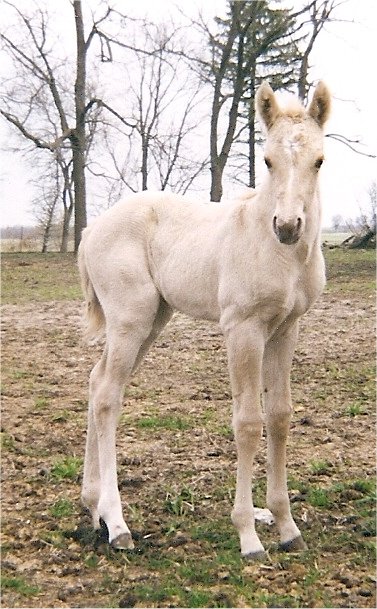
Dunalino Palomino + Dun Factor Click here for her web page to see mature color. |
 Grullo + Blue Roan |
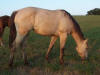 Buckskin + Dun ("dunskin") |
| Note that the two foals above are both dunalino, but were born and matured to totally different in colors. They are a prime example of why predicting foal colors from early photos can be difficult. | More composite color combinations can be seen here. | ||
Sorrel Bay Brown Black Grullo Dun Red Dun
Buckskin Palomino Smoky Black Cremello Perlino Smokey Cream
Gold Champagne Amber Champagne Classic Champagne
Blue Roan Bay Roan Brown Roan Red Roan Gray Silver Dapple
Comparisons Tricky Examples Back to Top
What color is YOUR foal?
The most common mistake people who contact me
make
is in
trying to get others to believe
that their foal or horse is the color
they WANT him to be.
Many, many people have asked me over the past few years what color their foals were, and then have refused to accept my opinion because they so badly wanted their foal to be a different color. As you try to figure out your foal's color, leave your personal preference out of it....go by the facts first. Hopefully, you'll be pleased in the end! But if not (for example, if you wanted him to be a grulla and he turns out to be a sooty buckskin), take comfort in the fact that you know the truth and can educate others about the differences between similar colors.
Click here to request help determining your horse or foal's color
Photo Ownership Notice:
All of the photos on this page are the property of Cedar Ridge QH's or were
sent to us with permission.
If someone has sent a photo to us for use on our pages that belongs to you,
and if they did not have
permission to do so,
please let us know.
If you are interested in contributing a photo, we thank you! But please do not
alter the photo or place your contact
information on it. Our educational pages are for just that...education. Not
advertisements. Thanks!
|
This page last updated
09/06/22
If you notice this date being 2 years or older, please let
us know that we need to check out this page!
Home Horses For Sale Stallions Mares Foals Blog Color Genetics Riding Horses Site Map Contact Us

Toni Perdew
Bedford, Iowa
toni@grullablue.com
712-370-0851 cell, before 9 p.m. CST

www.facebook.com/CedarRidgeQuarterHorses
Web design by
CR
Equine Sites.
All rights reserved. Graphics are watermarked for copyright protection.
Terms of Use