









Color Combinations
AKA: Composite Colors
|
Homozygous Colors Color Combinations Exceptions
Have you ever seen a horse that appeared to be a combination of two different colors? Or a horse that had 100% colored foals? How about a stallion who threw foals of a color that you would never have guessed, based upon how he looked (phenotype) and the colors of the mares he bred? These horses might be examples of horses that carry more than one color-modifying gene. This might be happening in one or both of two ways:
-
They may carry two identical color modifiers (homozygous for a trait), or
-
There may be two or more different color modifiers working in combination.
Heated arguments have happened over horse color. Many a long-time breeder has made the mistake of calling a sooty buckskin a grullo, or a graying horse a roan. Knowing what color a horse really is can help you look like you know what you're doing (instead of....well...looking inept), and can also help people (who have unusually-colored breeding stock) understand what to expect in their foals' colors.
It would take a couple chapters of a genetics book to describe all the combinations and the why's of them, but here's a shortened summary of what might go on with those unusually-colored horses.
Homozygous colors
Horses all are variations of a very few base colors. Some say all horses are a variation of sorrel or black, while others include bay in those base colors. To avoid going into more genetics here, I'll include 3 base colors from which all other colors evolve: sorrel, bay, and black.
A horse that is homozygous for a color means that the horse carries a matched pair of alleles for a certain color, and that all of its foals will receive one of those traits. Many of those traits can be seen visually. For example...horses that are homozygous for black will have 100% black-legged offspring.* A homozygous roan will have 100% roan foals.* A horse that is homozygous for the creme gene will have nearly all buckskin and palomino foals, and maybe a few smoky blacks.*
In order to be homozygous for a trait, BOTH parents of the horse must have had that same trait.
That means that a homozygous roan must have two roan parents. A homozygous gray must have two gray parents. A homozygous black must have both parents with black legs.* Registration papers can be wrong, but the parents themselves must both carry the same trait to have a foal that is homozygous for the trait.
Why is this important? It isn't, for most horses. It is mainly important to those horses that are of breeding quality and who are therefore used for breeding. Knowing a horse's homozygous status for color-affecting genes just allows you to have some predictability of offspring colors. Being homozygous for a trait does NOT constitute breeding quality! But it does help you predict and determine foal colors.
To learn more about what homozygous means, click here.
This table sums up what you might expect from horses that are homozygous for these traits:
| If a horse is homozygous for this trait.... | ...you can expect to see these colors of foals all the time.* |
| Black (not a color modifier, but one homozygous trait that you might see) |
Any body color, but always with black legs, mane, tail |
| Roan | Red roan, bay roan, and blue roan |
| Gray | Can be born any color, but will eventually turn gray, white (with dark skin), or fleabitten gray |
| Creme (buckskin/palomino) |
Buckskin, palomino, or smoky black |
| Dun factor | Red dun, dun, or grullo |
| Agouti | Sorrel, bay, and variations of those base colors, but NEVER black, grullo, or blue roan |
| Champagne | Varying shades of champagne |
| Silver Dapple | (coming soon...I haven't researched that yet) |
Examples of Homozygous Horses:
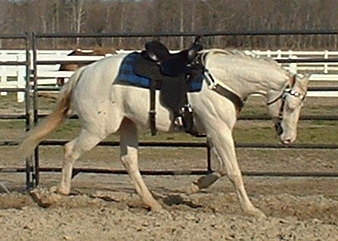 Homozygous for Creme, Homozygous for Black, and Homozygous for Dun Factor! |
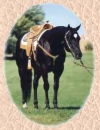
 AQHA Macriffik, left. AQHA Driftwood Amos, right. Homozygous for Black |
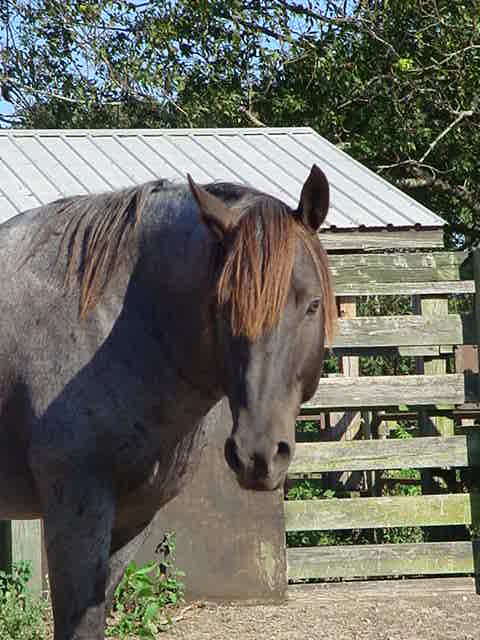 Looks like a normal roan. Homozygous for Roan |
 Could be many colors, but NOT black, blue roan, or grullo. Homozygous for Agouti |
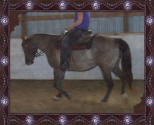
 Looks like any other gray. Homozygous for Gray |
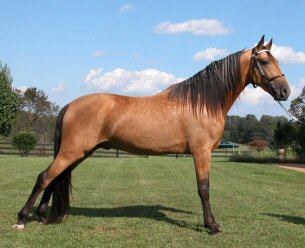
 Homozygous for Champagne |
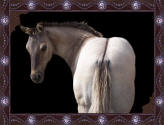 Homozygous for Dun Factor |
*Exceptions
Other genes can cover up or alter visual expression in horses that carry certain color genes. For example, a perlino or smoky creme foal can carry a black gene (or even be homozygous for black) but will still have white/cream legs. A gray gene will change black legs to gray or white over the years, though the horse still carries the black gene if it received it from a parent. Combinations with other colors may also change what you see.
To learn more about what homozygous means, click here.
Color Combinations (aka "Composite Colors")
There isn't any genetic law that says that you can't have a horse with multiple color-altering genes. All horses' genotype (genetic) color stems from their base color (sorrel, bay, or black). But the phenotype (how it looks visually) can be modified by one or more color-modifying genes. When horses receive more than one modifying gene, it can really get difficult--even emotional--when trying to determine its color.
Think of it as adding food coloring to water. If you drop blue food coloring into water, what color will the water turn? Blue! But what if you add yellow color to the blue water? There's no law against adding a second modifying color to the blue water, so do it! It then changes to green. You can keep on adding colors, and the water will keep changing for a couple more turns.
Horse colors are similar. If you add a dun gene to a bay foal's genetics, the foal will be dun instead of a bay. But if you add a gray gene to that dun, you will get a "dun turning gray." (This horse should properly be registered as a gray, even though it may look more like a dun when it is young...eventually, it will turn gray if it inherited a gray gene.) What if you added roan gene to that dun foal instead of gray gene? You would have a dun roan. AQHA would register this foal as a dun, though in the summer, its roan coloring would be easily seen. Some color combinations you might have seen and wondered about include:
-
buckskin roan
-
gray roan (will turn gray)
-
dunskin (dun + buckskin/creme)
-
dunalino (red dun + palomino/creme)
-
grullo roan
-
graying palomino (will turn gray)
Examples:
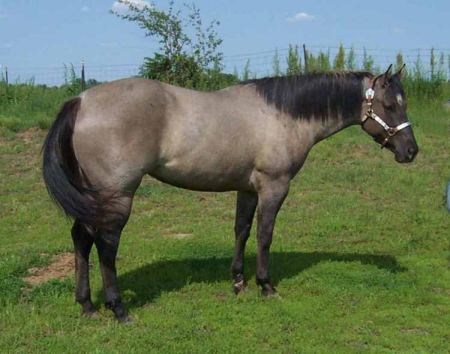
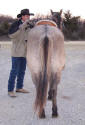
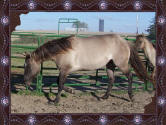 Blue Yahooty Hancock (left), and two of his daughters. Crowheart WYO Boy, an grullo roan stallion (right). Grullo + Roan |
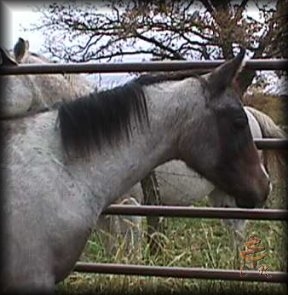
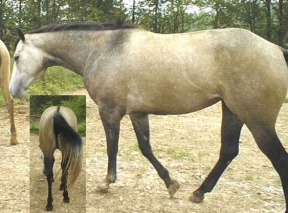
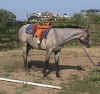 Weanling (left), yearling (right) (will eventually turn gray, but can also throw roan foals if bred) Gray + Roan |
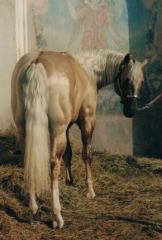 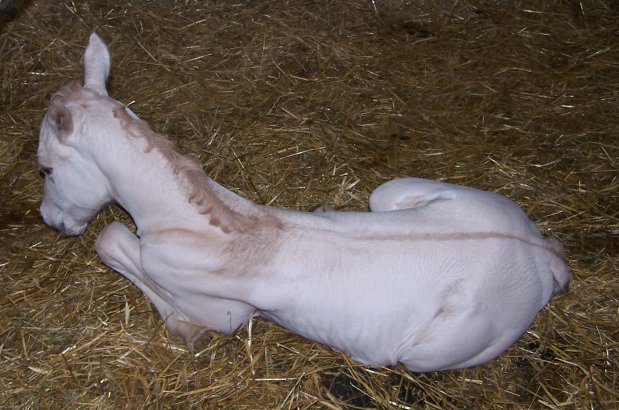 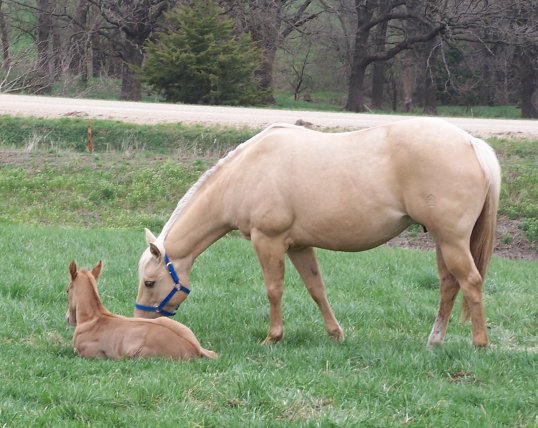 Dunalino: Red dun + Palomino (red dun + creme) The palomino on the right had a red dun foal from a black stallion. Both of her parents are grullo, and she has had 6 dun-factored foals in a row as of 2007. Dunalino |
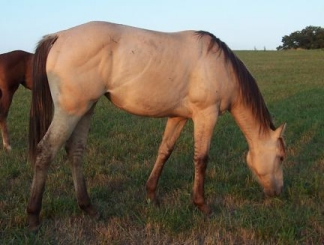
Dun + Buckskin (dun + creme) Dunskin |
 (will eventually turn gray, but can also throw dun-factored foals if bred) Gray + Grullo |
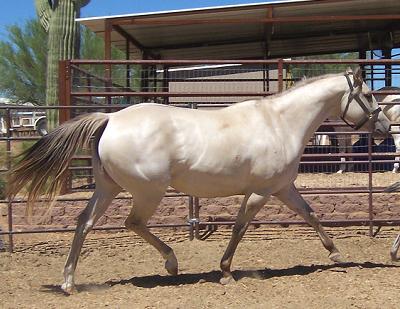
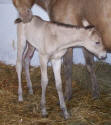 Champagne + Dun Factor |
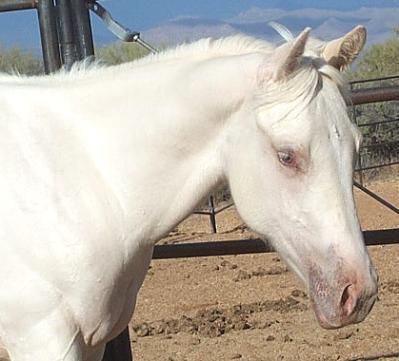
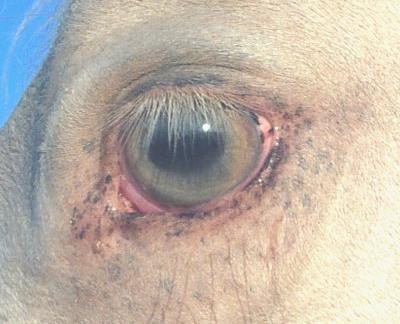
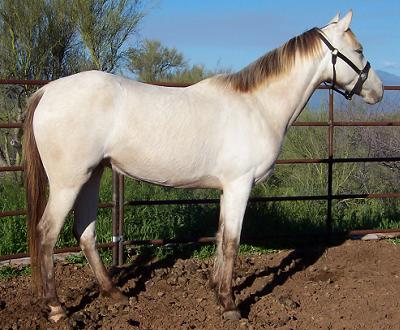
|
|
|
|
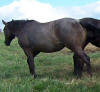
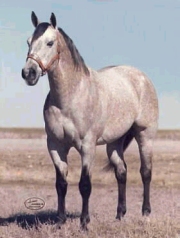 "Flying X 6" Roan+Gray+Probable Dun genes Note the upside-down "V" above the knees, which is a good indication of roaning. |
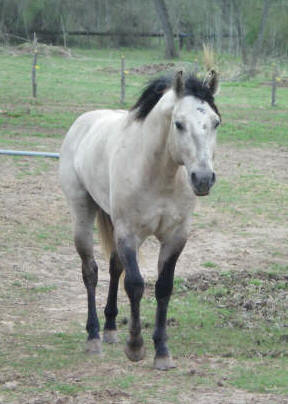 Gray+Dun with possible Roan and Cream genes |
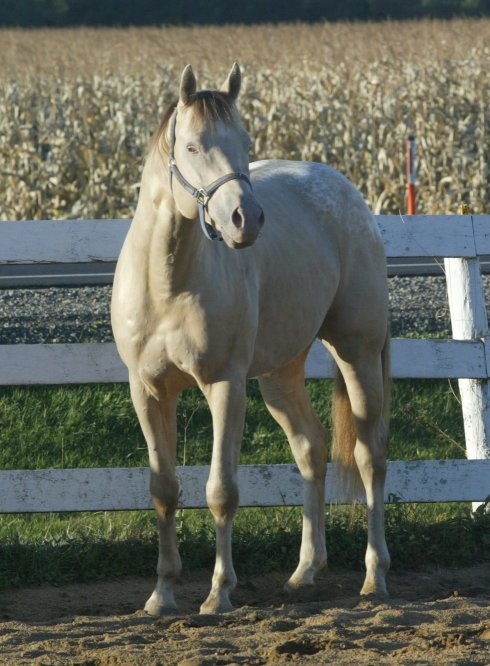 Champagne + Appaloosa pattern |
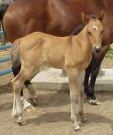
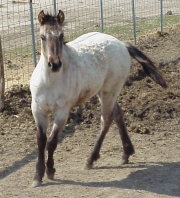 Foal color, left. Yearling, right. Dun + Roan |
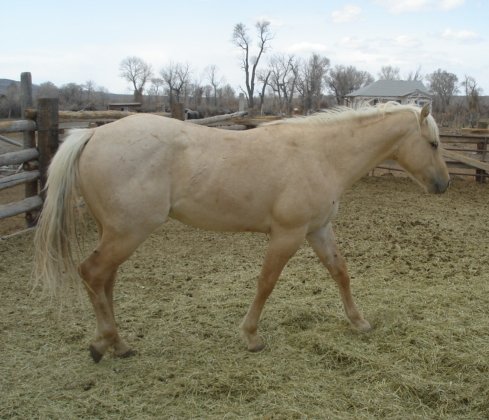 Palomino + Roan A Hancock-bred colt in Wyoming sports a shiny palomino coat with roan. |
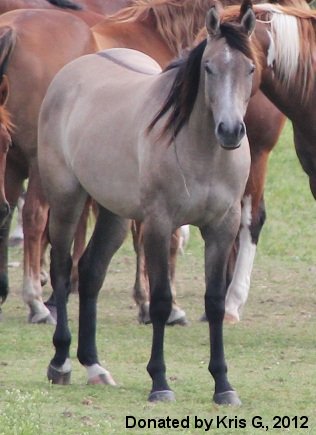 Gray + Dun Factor Will eventually turn gray, and should lose dorsal stripe as graying progresses. |
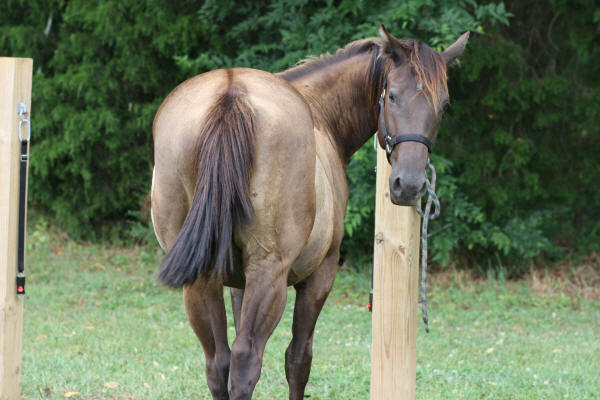
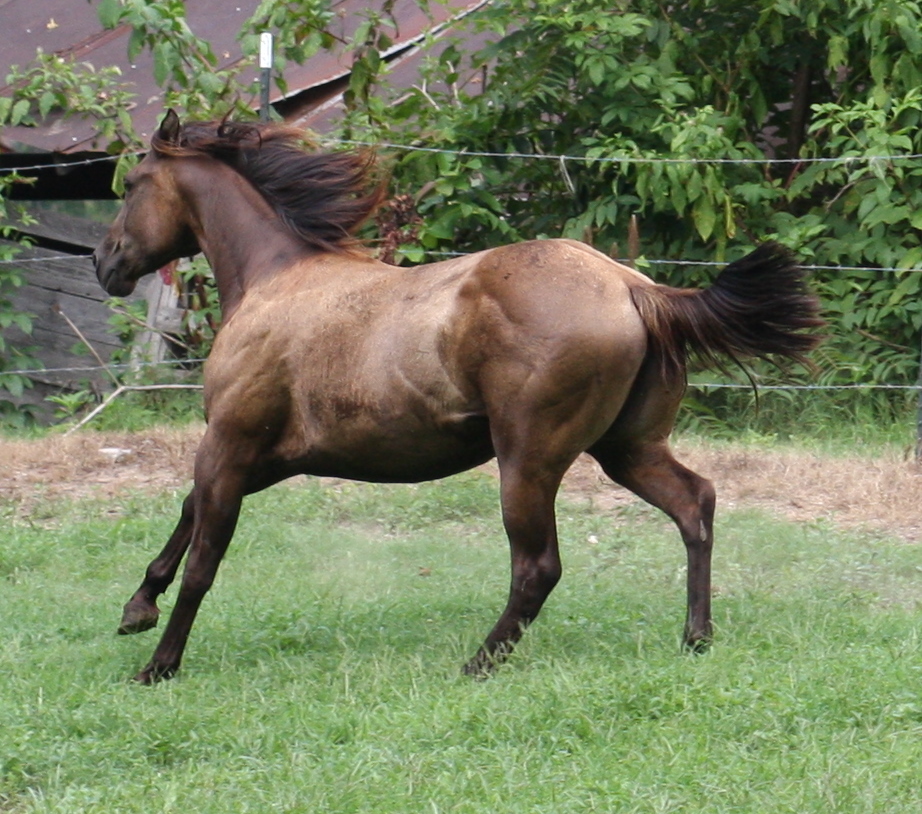
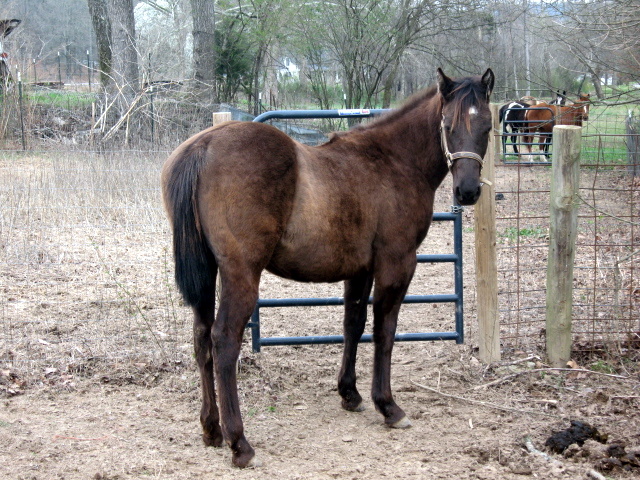
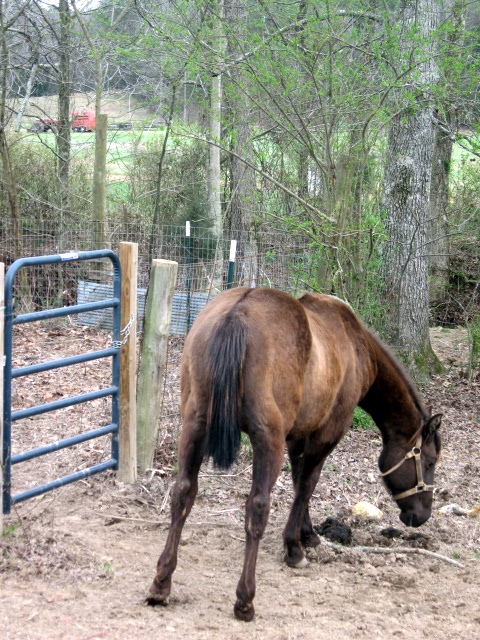
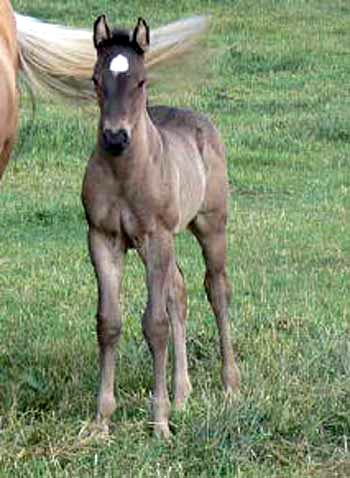
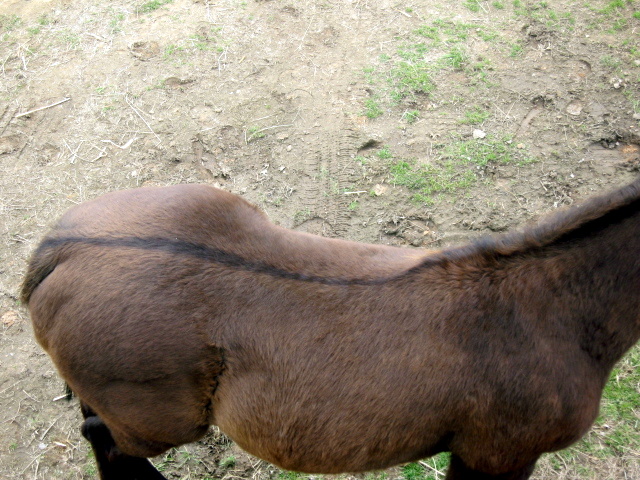
Smoky Black Black + Cream Gene
|
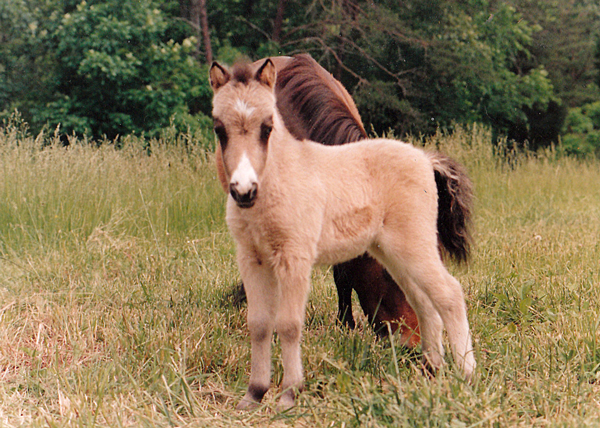 Black + Cream (smoky black) Yes, this foal is black! He is actually a "smoky black" mini foal. A smoky black is a black horse that also has one cream gene. The cream gene turns bays to buckskin, and sorrels to palominos. On a black horse, the cream gene does not markedly change the color, though we feel that most smoky blacks sun fade more than non-smoky blacks. |
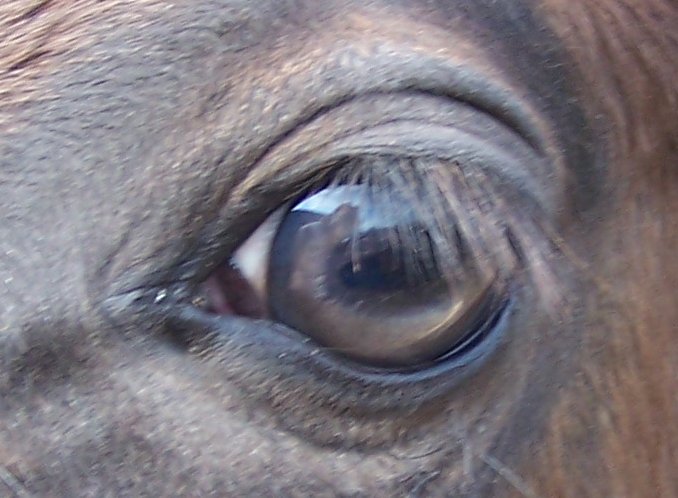
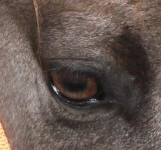
There are many, many more combinations of colors. Some are obvious, and some are not (for example, a grullo, black, or blue roan might also carry the creme gene, but you can't tell unless you test it or learn via its offspring). But the next time you see an oddly-colored horse, try to pick apart its characteristics and see if you can figure out what modification(s) have been applied to that base coat!
Photo Ownership Notice:
All of the photos on this page are the property of Cedar Ridge QH's or were
sent to us with permission.
If someone has sent a photo to us for use on our pages that belongs to you,
and if they did not have
permission to do so,
please let us know.
If you are interested in contributing a photo, we thank you! But please do not
alter the photo or place your contact
information on it. Our educational pages are for just that...education. Not
advertisements. Thanks!
|
How To Donate Your Educational Photo:
-
If you are wondering what color your foal is, click here. We are having a lot of people send us pictures for this page where it is obvious that the foal owners don't know what color their foal is. Please, only send us photos for this page if you know your foal's color. If you don't know what color your foal is, click here.
-
If you foal is a Paint or Appaloosa, we will only use it if the vast majority of the foal's body is not included in the white patterned areas, as this page is intended to help people determine foal colors, so the colored hairs must be very obvious.
-
This is an educational page, and photos should show a safe environment and healthy horses. I don't even know how to respond when I receive photos of wormy, skinny horses in pastures littered with abandoned cars, farm equipment, wire fences laying on the ground, and falling-down buildings. I simply can't put photos like that on an educational page like this, where people come to learn.
-
Please note that this is not intended to be a free opportunity for you to advertise your breeding operation, and instead is an educational page. We will not use photos with watermarks/writing on them. There are many free advertising sites on the Internet at which you can advertise your farm/ranch/horses. Also, only send photos of foals you own. This way, there won't be copyright problems.

Feel free to click the "Send Your Photo" logo
at the left to send a good photo or two to us for inclusion on our
color pages.
Photo Ownership Notice:
All of the photos on this page are the property of Cedar Ridge QH's or were
sent to us with permission.
If someone has sent a photo to us for use on our pages that belongs to you,
and if they did not have
permission to do so,
please let us know.
If you are interested in contributing a photo, we thank you! But please do not
alter the photo or place your contact
information on it. Our educational pages are for just that...education. Not
advertisements. Thanks!
This page last updated
05/28/21
If you notice this date being 2 years or older, please let
us know that we need to check out this page!
Home Horses For Sale Stallions Mares Foals Blog Color Genetics Riding Horses Site Map Contact Us

Toni Perdew
Bedford, Iowa
toni@grullablue.com
712-370-0851 cell, before 9 p.m. CST

www.facebook.com/CedarRidgeQuarterHorses
Web design by
CR
Equine Sites.
All rights reserved. Graphics are watermarked for copyright protection.
Terms of Use