









Quarter Horse Colors
|
The Quarter Horse breed has listed 17 acceptable colors for registration of foals (as of 2006). More colors exist that aren't listed, and if you have such a foal, you should register it according to the closest genetic color option that fits what you feel the foal will be at maturity. For example, a white horse with blue eyes that is "aa" for Agouti is really a double-diluted black. But it can be registered as a Perlino, because the correct option for a double-cream-diluted black is not offered by AQHA.
In addition, champagne and silver dapple genes are present in some QH's, but their colors are not options offered on the registration application. Combinations of multiple modifying genes also exist, and AQHA can help you determine the best color to register your foal if you are uncertain how it should be listed. We have a palomino mare that AQHA registered as a red dun. When questioned, they said it was because they knew she had dun factor due to her sire being a 100% color producer. Although she looks like a white-maned palomino with very faint gold striping, they required that she be registered as a red dun. They have rules they must follow, so inquire if you have a question.
2006 AQHA Registrations By Color
Courtesy of Deb Black at AQHA and
www.prettyquarterhorses.net
Percentages added by Cedar Ridge Quarter
Horses
|
Color of Horse |
Number of Horses Registered |
Percent of Registrations |
|
Bay |
30,862 |
18.69% |
|
Bay Roan |
3,864 |
2.34% |
|
Black |
5,844 |
3.54% |
|
Blue Roan |
3,747 |
2.27% |
|
Brown |
7,660 |
4.64% |
|
Buckskin |
8,811 |
5.34% |
|
Chestnut |
13,256 |
8.03% |
|
Cremello |
741 |
0.45% |
|
Dun |
5,945 |
3.60% |
|
Grey |
11,659 |
7.06% |
|
Grulla |
1,693 |
1.03% |
|
Palomino |
13,022 |
7.89% |
|
Perlino |
234 |
0.14% |
|
Red Dun |
4,855 |
2.94% |
|
Red Roan |
5,852 |
3.54% |
|
Sorrel |
46,976 |
28.45% |
|
TOTAL |
165,114 |
|
The table below shows horses that meet the required genetics for each color. Not all horses pictured are Quarter Horses, but the color genetics are the topic here, not breeds. :-)
The colors listed (as of 2006) are:
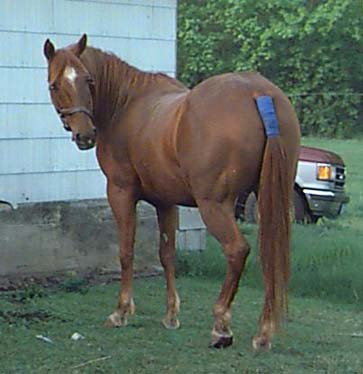
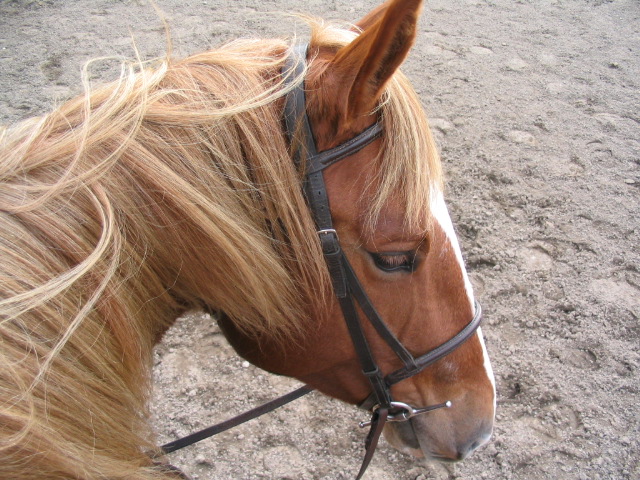 Sorrel Body color reddish or copper-red; mane and tail usually same color as body, but may be flaxen. The most common color of American Quarter Horses. |
 Bay Body color ranging from tan, through red, to reddish brown; mane and tail black; black on lower legs. |
 Black Body color true black without light areas; mane and tail black. Sun fading acceptable. |
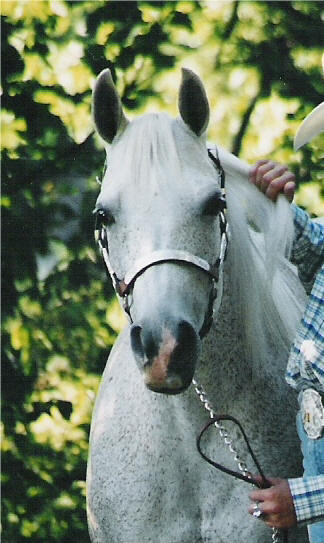 Gray Body color a mixture of white with any other colored hairs; often born solid-colored or almost solid-colored and gets lighter with age as more white hairs appear. |
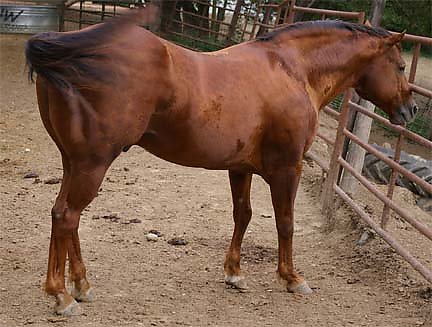
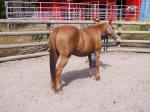
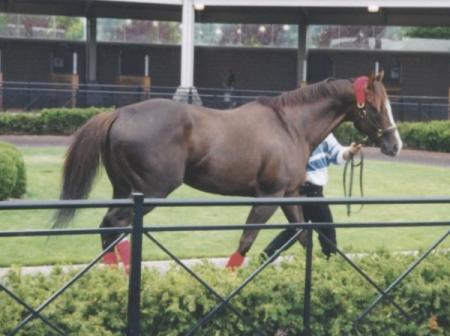 Chestnut Body color dark red or brownish-red; mane and tail usually dark red or brownish-red but may be flaxen. |
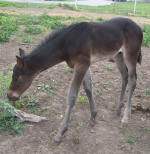
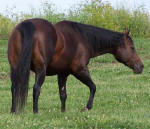
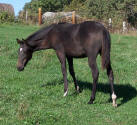 Brown Similar to black, but with brown on muzzle and flanks or larger area. These browns were not DNA confirmed, and are used as examples based upon how they look. |
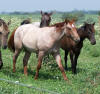
Blue Roan BLACK points (including head), roaned body. |
 Cremello Light (or pink) skin over the body, white or cream-colored hair and blue eyes. ee for Red Factor (genetically red-legged), but red color is diluted by two cream color dilution genes. |
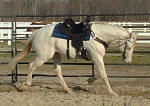
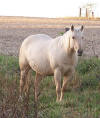 Palomino Gold/yellow body and head, white mane/tail. |
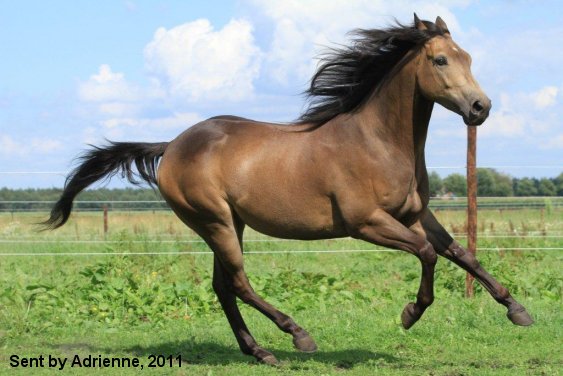
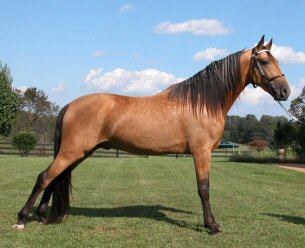 Buckskin Black points, mane, and tail. Gold/yellow body. May have faint dorsal and sooting/countershading. |
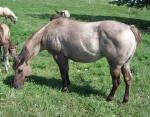
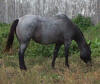
Grullo Black/dark points and dun factors, black or charcoal head, silver or grayish body with all body hairs being uniform in color. |
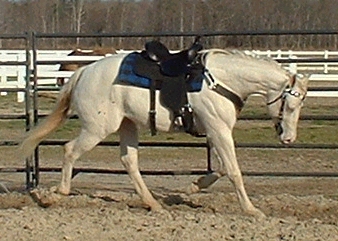
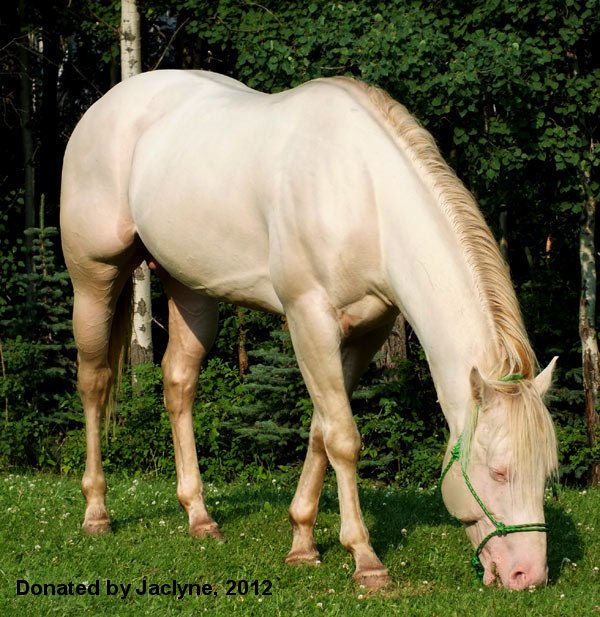 Perlino and Smoky Cream Light (or pink) skin over the body, white or cream-colored hair and blue eyes. Mane, tail and lower legs slightly darker than body color. EE or Ee for Red Factor (genetically, black legged) with 2 cream genes. Perlino is double cream plus Bay (AA or Aa). Smoky Creams are aa for Agouti and are not really Perlino, but are best registered as such until AQHA adds Smoky Cream as a color option on papers. |
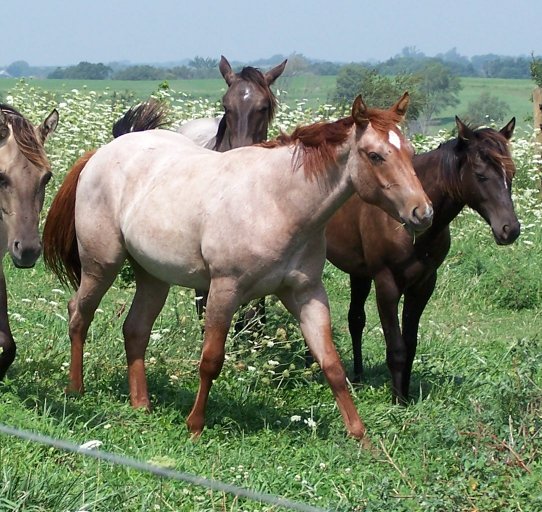 Red Roan Red points, roaned body. |
 Bay Roan BLACK points, brown/bay head, roaned body. Before 2002, bay roans were registered as red roans or blue roans, but should now be registered as bay roans. |
 White Body color white; skin is pink; eyes are usually dark; small black spots may be found in the skin, but usually are not accompanied by colored hair. Some white horses may be variegated, meaning they have patches of colored hair, usually intermixed with white. |
|
 Red Dun A form of dun with body color yellowish or flesh colored; mane, tail and dorsal stripe are red. |
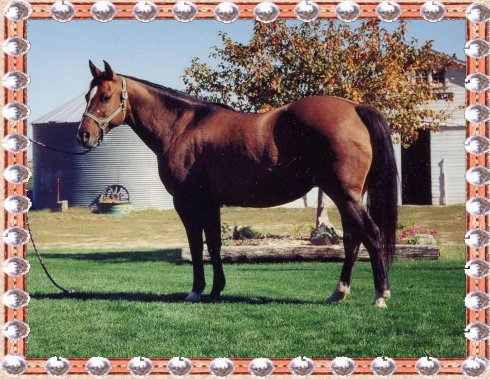
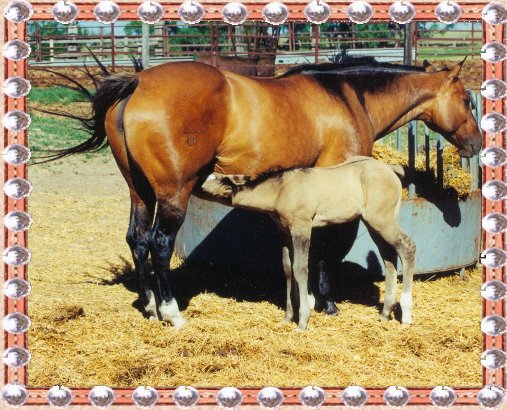 Dun Body color yellowish or gold; mane and tail may be black, brown, red, yellow, white or mixed; often has dorsal stripe, zebra stripes on legs, transverse over withers. This color would more correctly be called "bay dun." |
||
What's the same about horses in this column?The horses in this column all have red-based legs. They are "ee" for Red Factor, meaning they are red based and not black based. |
What's the same about horses in this column?These horses all have at least two things in common:
|
What's the same about horses in this column?These horses all have at least two things in common:
|
What's the same about horses in this column?This column is unique in that the colors above are not uniformly affected by one color gene. It is safe to say that they have white/extremely light hairs, but that their color is not necessarily caused by the same genes. |
Color descriptions above composed with consideration to AQHA color definitions.
See our Combinations page for horses with multiple genes that affect their color.
Other Acceptable Color Dilutions
Although AQHA does not list specific registration options for certain genes, there are some color modifiers that are acceptable to AQHA. These include (but might not be limited to) the Champagne gene and the Silver Dapple Gene.
ChampagneFoals might be registered as buckskins, palominos, and grullos even though they are genetically not the same. |
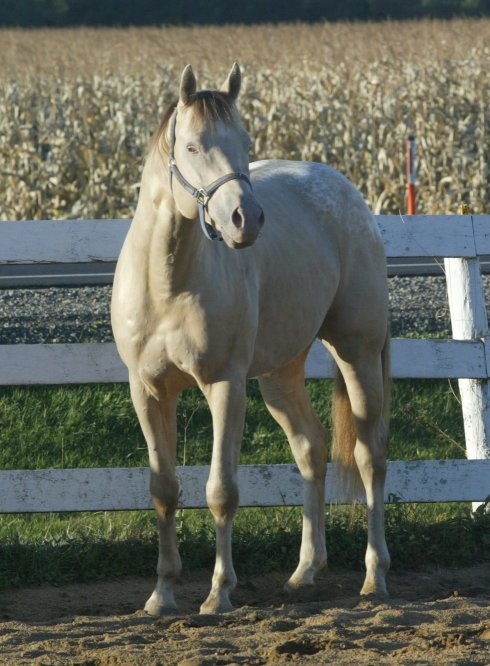
|
Silver DappleFoals would be registered as bay and chestnut in most cases, and a few might erroneously make it in as palominos. Learn more here. Only expressed on horses carrying a non-red gene or two non-red genes (EE or Ee) . Mane/tail flaxen or mixed. |
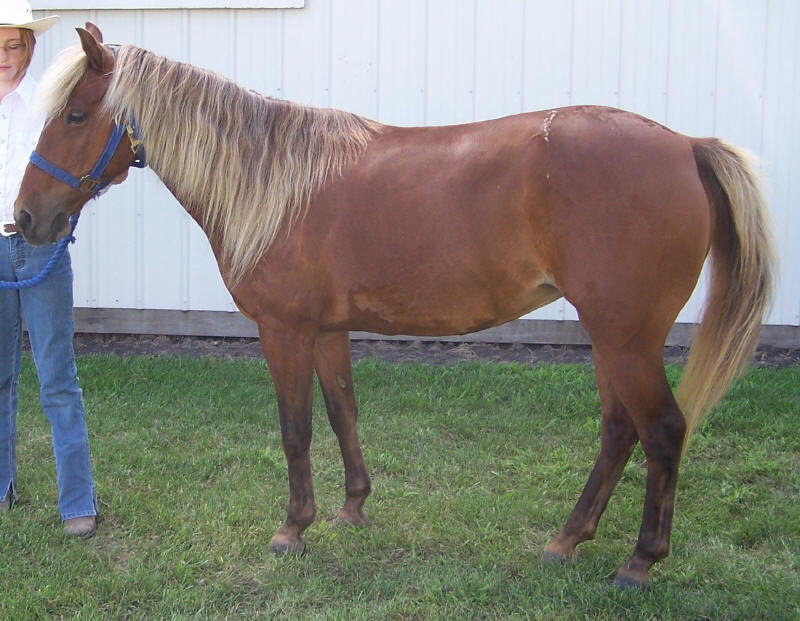
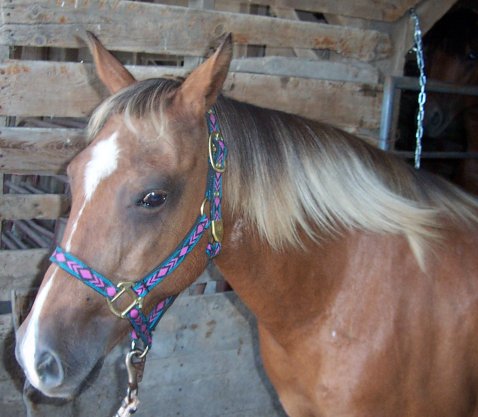
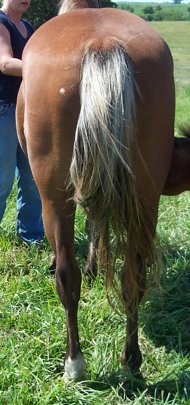
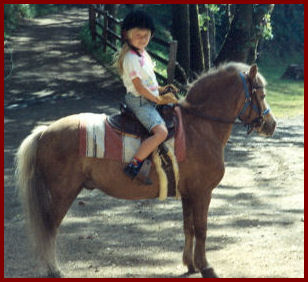 Bay silver ponies (above)
|

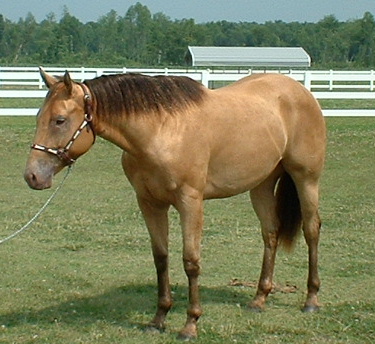
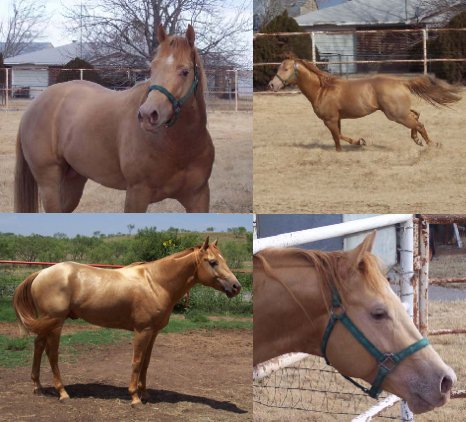
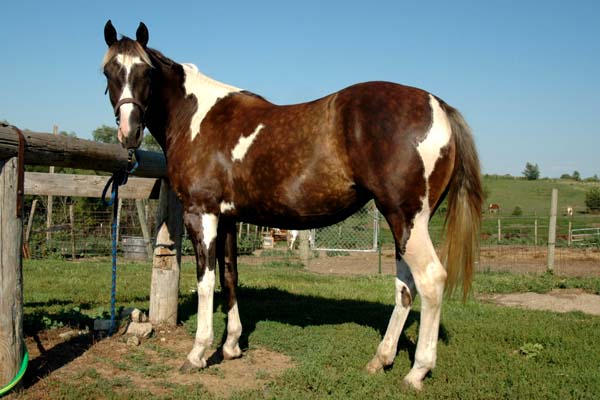
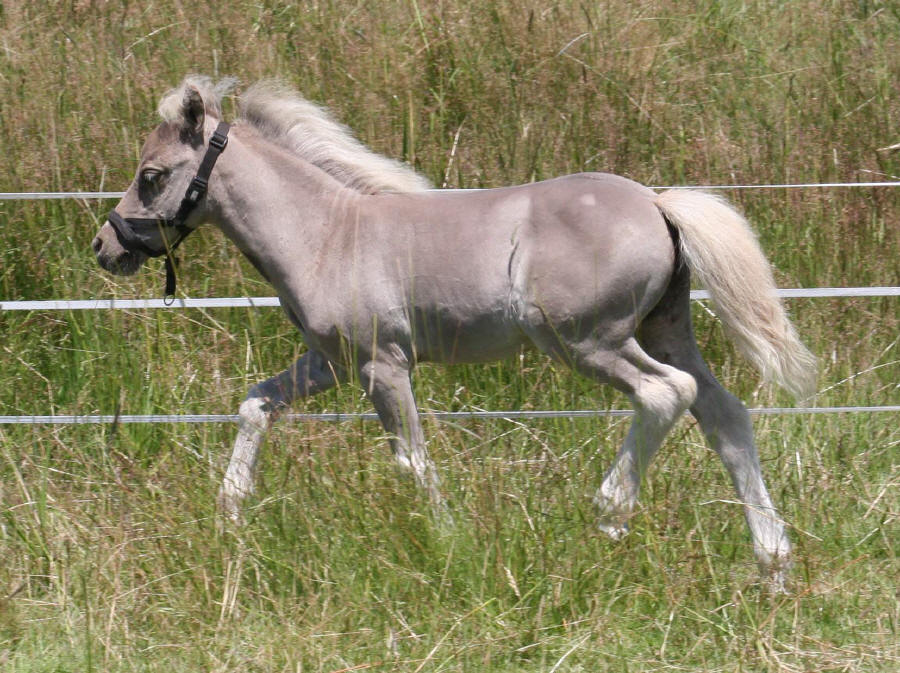
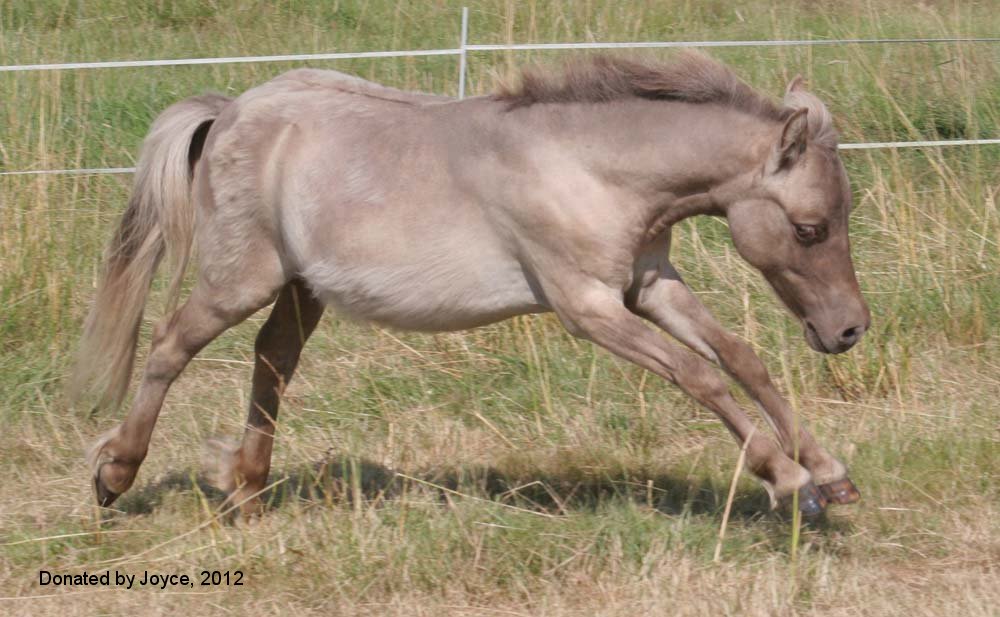
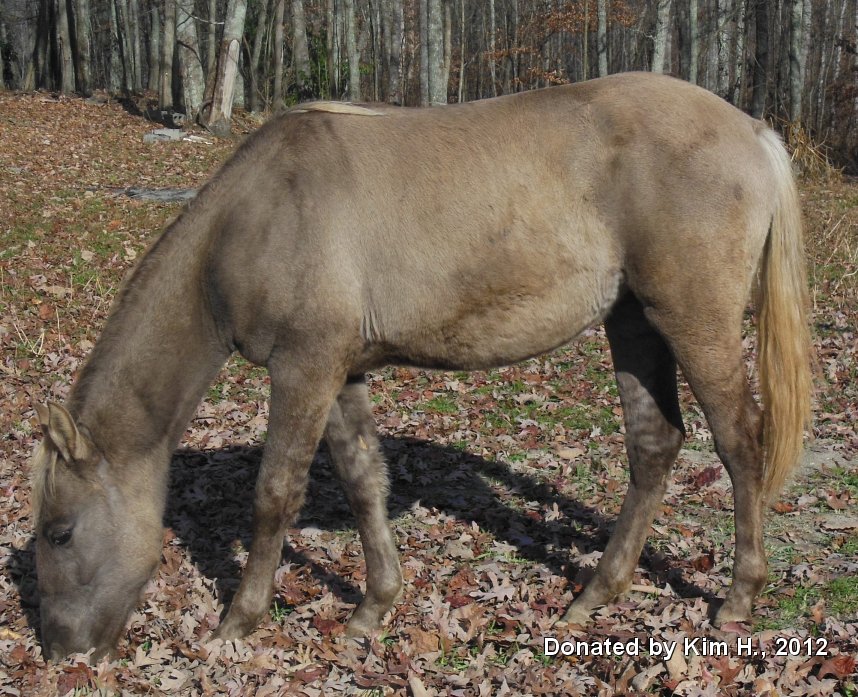
Photo Ownership Notice:
All of the photos on this page are the property of Cedar Ridge QH's or were
sent to us with permission.
If someone has sent a photo to us for use on our pages that belongs to you,
and if they did not have
permission to do so,
please let us know.
If you are interested in contributing a photo, we thank you! But please do not
alter the photo or place your contact
information on it. Our educational pages are for just that...education. Not
advertisements. Thanks!
|
How To Donate Your Educational Photo:
-
If you are wondering what color your foal is, click here. We are having a lot of people send us pictures for this page where it is obvious that the foal owners don't know what color their foal is. Please, only send us photos for this page if you know your foal's color. If you don't know what color your foal is, click here.
-
This is an educational page, and photos should show a safe environment and healthy horses. I don't even know how to respond when I receive photos of wormy, skinny horses in pastures littered with abandoned cars, farm equipment, wire fences laying on the ground, and falling-down buildings. I simply can't put photos like that on an educational page like this, where people come to learn.
-
Please note that this is not intended to be a free opportunity for you to advertise your breeding operation, and instead is an educational page. We will not use photos with watermarks/writing on them. There are many free advertising sites on the Internet at which you can advertise your farm/ranch/horses. Also, only send photos of foals you own. This way, there won't be copyright problems.

Feel free to click the "Send Your Photo" logo
at the left to send a good photo or two to us for inclusion on our
color pages.
Photo Ownership Notice:
All of the photos on this page are the property of Cedar Ridge QH's or were
sent to us with permission.
If someone has sent a photo to us for use on our pages that belongs to you,
and if they did not have
permission to do so,
please let us know.
If you are interested in contributing a photo, we thank you! But please do not
alter the photo or place your contact
information on it. Our educational pages are for just that...education. Not
advertisements. Thanks!
This page last updated
05/28/21
If you notice this date being 2 years or older, please let
us know that we need to check out this page!
Home Horses For Sale Stallions Mares Foals Blog Color Genetics Riding Horses Site Map Contact Us

Toni Perdew
Bedford, Iowa
toni@grullablue.com
712-370-0851 cell, before 9 p.m. CST

www.facebook.com/CedarRidgeQuarterHorses
Web design by
CR
Equine Sites.
All rights reserved. Graphics are watermarked for copyright protection.
Terms of Use